The best NSFW kitsune AI generators in 2026 are SeaArt AI, Tensor.Art, Mage.space, Civitai Generate, and Stable Diffusion with a kitsune LoRA. All five handle fox ears and multiple-tail anatomy well, and all allow NSFW output with the right model selection.
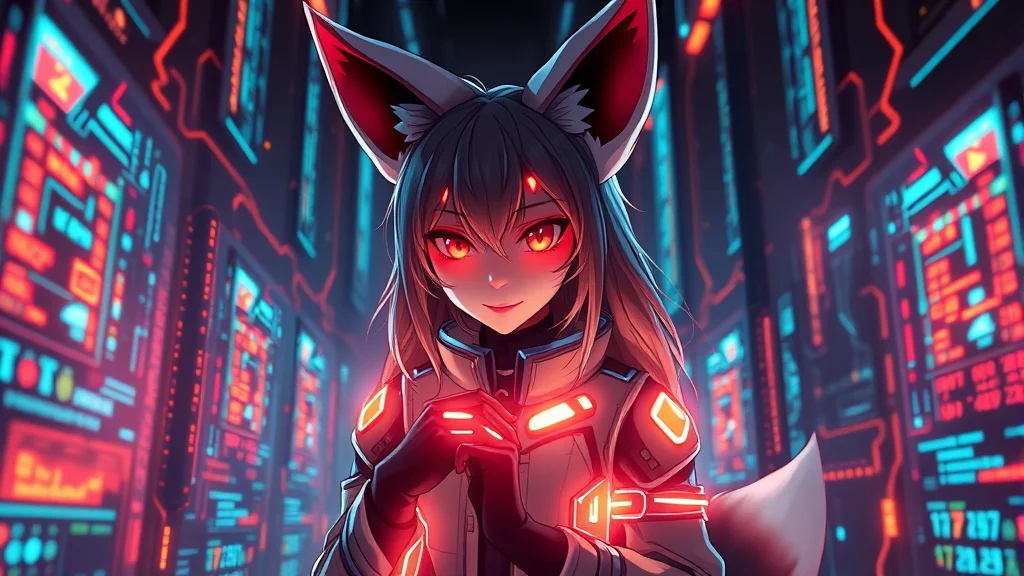
Kitsune characters (Japanese fox spirits) have become one of the most-requested niche styles in AI image generation. The challenge is anatomical precision: fox ears must sit correctly on the skull, multiple tails need to fan out naturally, and the overall aesthetic should blend Japanese mythology with contemporary anime illustration. Most mainstream generators produce mediocre results because they lack specialized checkpoints or LoRA support.
This guide covers the seven best platforms for NSFW kitsune AI generation in 2026, with test results, prompt strategies, and a comparison table so you can pick the right tool for your workflow. All platforms listed allow NSFW output – safe-only platforms are excluded.
Why Kitsune Characters Are Technically Demanding for AI
Kitsune are distinct from generic kemonomimi (animal-ear) characters in several key ways that trip up AI models. First, the ear placement: fox ears are set further back and wider than cat or dog ears. Second, tail count matters – a proper kitsune has anywhere from one to nine tails, and prompting “kitsune” alone on a generic model usually produces a single tail. Third, the preferred aesthetic blends Japanese shrine-maiden (miko) imagery with modern anime, which requires either a checkpoint trained on that intersection or a targeted LoRA.
The platforms below all handle at least two of these three requirements well. Stable Diffusion with a dedicated LoRA handles all three.
The 7 Best NSFW Kitsune AI Generators (2026)
1. SeaArt AI
SeaArt AI is the strongest cloud option for kitsune generation. Its model library includes multiple anime checkpoints that handle fox ears and tail anatomy without extra prompting. The free tier gives 100 credits daily, enough for 20-30 generations. NSFW output is unlocked in the settings panel with an age confirmation. The “Anime Detailed” and “Counterfeit” model options produce sharp, well-proportioned kitsune characters. Miko outfit prompts resolve correctly, and tail count responds accurately to “multiple tails, 3 tails” type prompts.
2. Tensor.Art
Tensor.Art doubles as a model hosting platform, which means you can browse community-uploaded anime checkpoints and apply them directly in the browser. This makes it uniquely powerful for kitsune: search “kitsune” in the model browser, find a dedicated checkpoint or LoRA, and apply it to your generation in one click. Free tier is generous. NSFW content is allowed under its content policy with model-level controls. Recommended checkpoints: “Anything V5,” “AbyssOrangeMix3” with a kitsune LoRA layered on top.
3. Mage.space
Mage.space offers a clean, fast interface with a toggle for “unsafe” mode that unlocks NSFW output. Model selection includes several anime-focused options including Anything V4.5. Kitsune results are solid on the anime models – fox ears and basic tail rendering are handled well. The free tier is limited to queue-based generation but there is no daily credit cap. Resolution maxes at 512×768 on free, which is adequate for character close-ups.
4. Civitai Generate
Civitai Generate gives you direct access to the platform’s massive LoRA library during generation. Browse kitsune-specific LoRAs, stack them with your chosen checkpoint, and generate in the browser. This is the closest cloud equivalent to running Stable Diffusion locally. NSFW output is available on models tagged for it. The generation interface supports negative prompts, sampler selection, and CFG control. Buzz (credit) costs are low for basic generations.
5. Stable Diffusion (Local – AUTOMATIC1111)
AUTOMATIC1111 running locally is the gold standard for NSFW kitsune generation. You have full model control, no content filtering, unlimited generations, and privacy. Download a kitsune-focused LoRA from Civitai (search “kitsune” under LoRAs), load an anime checkpoint like “MeinaMix” or “Counterfeit V3,” and layer the LoRA at 0.7-0.9 strength. Tail count becomes fully controllable. Requires a GPU (8GB VRAM minimum for 512px); CPU generation is possible but slow.
6. Perchance AI
Perchance AI is a fully free, no-registration NSFW generator. It handles anime-style characters reasonably well using its built-in model. Kitsune results are passable – fox ears render correctly but multi-tail anatomy is less precise than dedicated platforms. Best for quick ideation or users who want zero account friction. No API, no LoRA support, limited resolution. Use it as a starting point to test prompt variations before moving to a more capable platform.
7. Nijijourney (Anime Midjourney)
Nijijourney is the anime-specialized version of Midjourney. It produces exceptionally high-quality kitsune illustrations with excellent tail rendering and Japanese aesthetic accuracy. The limitation: Nijijourney’s content policy currently blocks explicit NSFW output. It is excellent for SFW and tasteful suggestive kitsune art. If your use case is non-explicit fox-girl characters – pin-up style, lingerie, artistic nudity – Nijijourney is the quality benchmark. For explicit content, use one of the five platforms above.
Quick Comparison
| Platform | Free tier | NSFW allowed | LoRA support | Kitsune quality |
|---|---|---|---|---|
| SeaArt AI | 100 credits/day | Yes | Via model select | Excellent |
| Tensor.Art | Daily credits | Yes | Yes (browser) | Excellent |
| Mage.space | Queue-based | Yes (unsafe mode) | No | Good |
| Civitai Generate | Buzz credits | Yes (model-based) | Yes | Excellent |
| Stable Diffusion | Free (local) | Yes (unlimited) | Yes (full) | Best (with LoRA) |
| Perchance AI | Fully free | Yes | No | Basic |
| Nijijourney | No | Tasteful only | No | Excellent (SFW) |
Prompts That Work for NSFW Kitsune AI
The core tag cluster for kitsune: kitsune, fox girl, fox ears, multiple tails, fluffy tail, inari, Japanese mythology, miko outfit. For more tails, be explicit: 9 tails, nine-tailed fox, ethereal tails. Negative prompts should block competing ear types: dog ears, wolf ears, cat ears, normal ears, bunny ears. For NSFW variants, add your standard explicitness descriptors after the character tags. Sampling: DPM++ 2M Karras at 25-30 steps, CFG 7.
For pose inspiration, combine with floating shrine, moonlit forest, lantern light, sitting on shrine steps. The atmospheric context cues help anime checkpoints produce the correct stylistic register rather than generic fantasy.
Related Guides
For similar niche-style generators, see our best NSFW catgirl AI generator guide and best NSFW succubus AI generator guide. For technical workflow improvements, our LoRA training guide covers building a custom kitsune LoRA from scratch. Full tool landscape at our NSFW AI image generator pillar.
How to Get the Best Kitsune Results on Each Platform
Getting consistent, high-quality kitsune output requires platform-specific approach adjustments. On SeaArt, the single highest-impact change is switching from the default model to one of the explicitly anime-trained options. The “Counterfeit V3” checkpoint on SeaArt responds correctly to ear-placement prompts and renders tail texture with visible individual fur strands rather than a flat shape. Use the “portrait” aspect ratio mode for character close-ups, and “full body” for standing poses – SeaArt has AR presets that are significantly more reliable than manually entering pixel dimensions.
On Tensor.Art, the LoRA browser is the key feature. Before generating, open the model browser panel, search “kitsune” under LoRAs, and sort by Liked count. The top 3-4 results will have preview images showing the quality tier. Download directly to your session. Start with the highest-rated LoRA at 0.7 strength – if the result is too stylized away from the base model’s quality, reduce to 0.55. Stack a separate “detailed fur” texture LoRA if available for better tail rendering.
On Stable Diffusion locally, the key is sampler choice. DPM++ 2M Karras at 28-32 steps produces sharper fur and ear detail than DDIM or Euler at the same step count. Enable Hires fix at 1.5x scale with 0.4 denoising for a second pass that sharpens fine details. The difference in tail fur detail between a single 512px pass and a 512px + Hires.fix pass is significant on kitsune characters where texture quality matters aesthetically.
Building a Kitsune Character Series
For creators who want a consistent kitsune character across multiple images (for a story, game, or content series), the workflow is: establish a reference seed cluster, train or download a character LoRA, and use a fixed prompt core with varied scene/pose additions per image.
Reference seed cluster: generate 30-50 images of your kitsune character description at varying seeds. Identify the 5-10 seeds that produce the closest match to your mental image. These become your reference seeds. Note them in a text file with the prompt used. When generating series images later, start from one of these seeds and vary the scene elements while keeping the character prompt identical.
For a dedicated LoRA: collect 15-20 of your best reference images, crop to 512×512 or 768×768, and train a LoRA at 1500-2000 steps using AUTOMATIC1111’s training module or kohya_ss. See our LoRA training guide for the step-by-step process. A kitsune character LoRA trained on your reference seeds will reproduce the same face, ear placement, and tail style across any new scene prompt you apply it to.
Common Kitsune AI Generation Mistakes
The most frequent mistakes when prompting kitsune characters: using “fox girl” without “kitsune” (produces generic fox-costume results rather than proper kitsune anatomy); using “tails” as a standalone tag without specifying count (typically produces one or two tails); not blocking competing ear types in the negative prompt (result has wolf ears, cat ears, or no ears); and using a non-anime checkpoint (realistic photography checkpoints produce poor kitsune results because the anatomy has no representation in photographic training data).
A secondary mistake is using CFG values that are too high. CFG 10+ on kitsune prompts tends to over-sharpen and introduce ear distortion artifacts as the model tries too hard to satisfy the fox-feature descriptors. CFG 6-7.5 produces cleaner feature integration. Negative prompt strength adjustments (the [word:weight] syntax in AUTOMATIC1111) can help suppress specific unwanted features without using a high global CFG.
NSFW Kitsune Prompt Library
A curated set of tested prompt combinations for NSFW kitsune generation:
Classic miko (shrine maiden) kitsune: masterpiece, best quality, 1girl, kitsune, fox girl, fox ears, 9 tails, fluffy tails, inari shrine maiden, red and white miko outfit, barefoot, outdoor shrine, moonlight, detailed
Modern casual kitsune: masterpiece, best quality, 1girl, kitsune, fox ears, two tails, white hair, amber eyes, casual clothing, city street, night, neon light, detailed fur, kemonomimi
Dark-elemental kitsune: masterpiece, best quality, 1girl, kitsune, dark fox, obsidian fur tails, nine tails, red eyes, dark shrine, shadow magic, dark fantasy, dramatic lighting, atmospheric
For NSFW variants, append your preferred content descriptors after the character and scene tags. The character foundation tags above work on all NSFW-permissive anime checkpoints without modification.
For seasonal and holiday variations, the kitsune aesthetic pairs well with autumn leaves, maple, lantern festival (autumn), snow, winter shrine, frozen pond (winter), and cherry blossom, hanami, spring festival (spring). Each seasonal context shifts the color palette while keeping the kitsune character legible.
How to Get the Best Kitsune Results on Each Platform
Getting consistent, high-quality kitsune output requires platform-specific approach adjustments. On SeaArt, the single highest-impact change is switching from the default model to one of the explicitly anime-trained options. The “Counterfeit V3” checkpoint on SeaArt responds correctly to ear-placement prompts and renders tail texture with visible individual fur strands rather than a flat shape. Use the “portrait” aspect ratio mode for character close-ups, and “full body” for standing poses – SeaArt has AR presets that are significantly more reliable than manually entering pixel dimensions.
On Tensor.Art, the LoRA browser is the key feature. Before generating, open the model browser panel, search “kitsune” under LoRAs, and sort by Liked count. The top 3-4 results will have preview images showing the quality tier. Download directly to your session. Start with the highest-rated LoRA at 0.7 strength – if the result is too stylized away from the base model’s quality, reduce to 0.55. Stack a separate “detailed fur” texture LoRA if available for better tail rendering.
On Stable Diffusion locally, the key is sampler choice. DPM++ 2M Karras at 28-32 steps produces sharper fur and ear detail than DDIM or Euler at the same step count. Enable Hires fix at 1.5x scale with 0.4 denoising for a second pass that sharpens fine details. The difference in tail fur detail between a single 512px pass and a 512px + Hires.fix pass is significant on kitsune characters where texture quality matters aesthetically.
Building a Kitsune Character Series
For creators who want a consistent kitsune character across multiple images (for a story, game, or content series), the workflow is: establish a reference seed cluster, train or download a character LoRA, and use a fixed prompt core with varied scene/pose additions per image.
Reference seed cluster: generate 30-50 images of your kitsune character description at varying seeds. Identify the 5-10 seeds that produce the closest match to your mental image. These become your reference seeds. Note them in a text file with the prompt used. When generating series images later, start from one of these seeds and vary the scene elements while keeping the character prompt identical.
For a dedicated LoRA: collect 15-20 of your best reference images, crop to 512×512 or 768×768, and train a LoRA at 1500-2000 steps using AUTOMATIC1111’s training module or kohya_ss. See our LoRA training guide for the step-by-step process. A kitsune character LoRA trained on your reference seeds will reproduce the same face, ear placement, and tail style across any new scene prompt you apply it to.
Common Kitsune AI Generation Mistakes
The most frequent mistakes when prompting kitsune characters: using “fox girl” without “kitsune” (produces generic fox-costume results rather than proper kitsune anatomy); using “tails” as a standalone tag without specifying count (typically produces one or two tails); not blocking competing ear types in the negative prompt (result has wolf ears, cat ears, or no ears); and using a non-anime checkpoint (realistic photography checkpoints produce poor kitsune results because the anatomy has no representation in photographic training data).
A secondary mistake is using CFG values that are too high. CFG 10+ on kitsune prompts tends to over-sharpen and introduce ear distortion artifacts as the model tries too hard to satisfy the fox-feature descriptors. CFG 6-7.5 produces cleaner feature integration. Negative prompt strength adjustments (the [word:weight] syntax in AUTOMATIC1111) can help suppress specific unwanted features without using a high global CFG.
NSFW Kitsune Prompt Library
A curated set of tested prompt combinations for NSFW kitsune generation:
Classic miko (shrine maiden) kitsune: masterpiece, best quality, 1girl, kitsune, fox girl, fox ears, 9 tails, fluffy tails, inari shrine maiden, red and white miko outfit, barefoot, outdoor shrine, moonlight, detailed
Modern casual kitsune: masterpiece, best quality, 1girl, kitsune, fox ears, two tails, white hair, amber eyes, casual clothing, city street, night, neon light, detailed fur, kemonomimi
Dark-elemental kitsune: masterpiece, best quality, 1girl, kitsune, dark fox, obsidian fur tails, nine tails, red eyes, dark shrine, shadow magic, dark fantasy, dramatic lighting, atmospheric
For NSFW variants, append your preferred content descriptors after the character and scene tags. The character foundation tags above work on all NSFW-permissive anime checkpoints without modification.
For seasonal and holiday variations, the kitsune aesthetic pairs well with autumn leaves, maple, lantern festival (autumn), snow, winter shrine, frozen pond (winter), and cherry blossom, hanami, spring festival (spring). Each seasonal context shifts the color palette while keeping the kitsune character legible.
Frequently Asked Questions
What is a kitsune AI generator?
A kitsune AI generator is a text-to-image AI tool capable of producing fox-girl characters that blend human anatomy with fox ears, multiple tails, and Japanese mythological styling. Platforms with anime-focused checkpoints or kitsune-specific LoRAs deliver the best results.
Which AI generates the best kitsune fox-girl images?
SeaArt AI and Tensor.Art consistently produce the most detailed kitsune images thanks to their curated anime model libraries. For full creative control, Stable Diffusion with a Civitai kitsune LoRA gives the best results for NSFW output.
Is kitsune AI image generation free?
Yes. SeaArt, Tensor.Art, Mage.space, and Perchance all offer free tiers that can generate kitsune-style images. Stable Diffusion locally is completely free once you have the hardware. Daily credit limits apply on cloud platforms.
Do I need a LoRA to generate kitsune characters?
Not always. Many anime checkpoint models produce passable fox-girl results from prompt alone using tags like ‘fox ears, multiple tails, kitsune.’ A dedicated kitsune LoRA on Civitai significantly sharpens the ear shape, tail count, and shrine-maiden styling.
What prompts work best for kitsune AI images?
Core tags: ‘kitsune, fox ears, multiple tails, fluffy tail, fox girl, inari, shrine maiden, Japanese mythology.’ For NSFW output add your standard explicitness tags plus ‘tail wrapping.’ Negative prompts: ‘dog ears, wolf ears, normal ears.’
Are kitsune AI generators safe to use?
Cloud platforms like SeaArt and Tensor.Art are safe in terms of data handling. Always read the platform’s content and data policy before uploading reference images. Local Stable Diffusion is the most private option since nothing leaves your machine.
Can I use kitsune AI images commercially?
It depends on the platform’s terms. Stable Diffusion outputs are generally usable commercially. SeaArt and Tensor.Art have varying commercial clauses per their TOS. Always verify before monetizing generated images.
What is the difference between kitsune and kemonomimi in AI prompts?
Kemonomimi is the broader category (any animal ears on a human). Kitsune is specifically fox-themed with multiple tails. Using ‘kemonomimi’ alone may produce any animal-ear type; use ‘kitsune, fox ears, multiple tails’ for fox-specific results.