AI deepfake laws are tightening worldwide. Non-consensual sexual deepfakes of real people are illegal or actionable in the US, UK, EU, Australia, South Korea, Canada, and more. This post informs, it does not enable, such content. This is not legal advice. Keep all subjects adult, fictional, and AI-generated.
Deepfake law has moved fast. Just a few years ago, victims of non-consensual sexual deepfakes had patchy legal recourse. As of 2026, a growing list of major jurisdictions have specific criminal offences, removal mandates, and civil remedies, and the direction of travel is unmistakable: more protection for victims and more liability for those who create and share this material. This guide summarizes how major countries treat non-consensual sexual deepfakes of real people. Its purpose is to inform you about a serious and shifting legal landscape, not to help anyone make or distribute harmful content. Non-consensual deepfakes of real people are illegal and harmful, full stop. This is information, not legal advice, and you should consult a qualified lawyer for your jurisdiction.
What this post covers, and what it does not
This is specifically about non-consensual sexual or intimate deepfakes of real, identifiable people, the category that has driven nearly all the new lawmaking. It is not about fictional AI-generated adults, which is a separate topic covered in is AI porn legal. The universal rule underlying everything here is consent. Creating sexual depictions of a real person without their consent is the harm these laws target, and it is the line you must never cross. For context on the broader safety picture, see the is NSFW AI safe hub.
Laws change constantly, and summaries age. Treat the descriptions below as a general orientation as of 2026, not as the current letter of the law in your area. Always verify with a local professional.
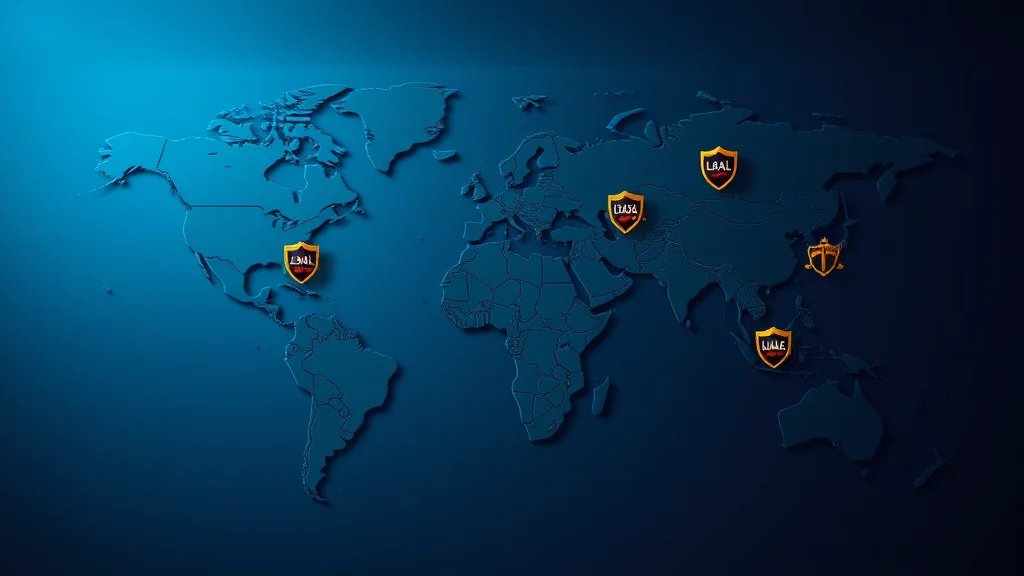
United States
The US now has both federal and state-level protection. At the federal level, the TAKE IT DOWN Act addresses non-consensual intimate imagery, including AI-generated deepfakes, criminalizing the publication of such content and requiring online platforms to remove it quickly once notified. We explain it in depth in the TAKE IT DOWN Act explained.
On top of the federal law, a large and growing number of states have their own statutes covering non-consensual deepfakes, intimate-image abuse, and in some cases political or election-related deepfakes. These vary in scope, with some focused on distribution and others reaching creation, and many providing civil remedies so victims can sue for damages. The combined effect is that non-consensual sexual deepfakes of real people face meaningful legal exposure across the US, both criminal and civil.
United Kingdom
The UK has taken a firm stance. The Online Safety Act and subsequent measures created offences targeting intimate-image abuse, and the framework has been extended to cover the creation and sharing of sexually explicit deepfakes without consent, not only their distribution. Regulators have also placed duties on platforms to tackle this content.
The practical upshot is that making or sharing non-consensual sexual deepfakes of real people in the UK can be a criminal offence, with the law specifically updated to close gaps that earlier statutes left open. The UK has been among the more aggressive jurisdictions in reaching the act of creation itself, not just publication.
European Union
The EU operates on two levels. The AI Act introduces transparency obligations, including requirements to label certain AI-generated and manipulated content such as deepfakes, aimed at making synthetic media identifiable. Separately, EU-wide rules on gender-based and digital violence have moved to criminalize non-consensual sharing of intimate images and certain deepfake abuses across member states.
Individual member states then add their own criminal and civil laws, so the exact offence and penalty depend on the specific country. Germany, France, and others have their own provisions on intimate-image abuse and personality rights. The combination of EU-level mandates and national law means non-consensual sexual deepfakes face layered restrictions throughout the bloc.
Australia
Australia has well-developed image-based abuse laws and an active regulator empowered to order removal of non-consensual intimate content, including deepfakes, and to penalize those who post it. National reforms have specifically targeted the creation and sharing of sexually explicit deepfakes without consent, strengthening both criminal penalties and the civil takedown system.
The regulator’s takedown powers make Australia notable for practical enforcement, giving victims a route to fast removal alongside the criminal and civil consequences for offenders.
South Korea
South Korea has confronted a significant deepfake abuse problem and responded with some of the strictest laws anywhere. The country criminalizes the creation, distribution, and, notably, the possession or viewing of sexually explicit deepfake material involving real people without consent. Penalties are severe, and enforcement has intensified following high-profile cases.
South Korea is therefore one of the jurisdictions where the legal net is widest, reaching not only creators and distributors but also those who knowingly possess or consume such content.
Canada
Canada addresses non-consensual intimate imagery through criminal law on distribution and through civil remedies, and provinces have added their own intimate-image laws that increasingly account for altered and AI-generated content. The framework allows victims to pursue both criminal complaints and civil claims for damages and removal.
As elsewhere, the trend in Canada is toward explicitly covering synthetic and deepfake material rather than relying only on older statutes written for real photographs.
Other jurisdictions and the global trend
Beyond the countries above, many others have enacted or are advancing laws. India addresses such content through IT rules and criminal provisions on obscenity, privacy, and impersonation. Japan, Singapore, and various others have intimate-image and privacy laws that reach deepfake abuse to differing degrees. The unmistakable global pattern is rapid expansion of legal protection for victims and growing liability for offenders.
The takeaway is not the precise wording in any one place. It is that there is no safe haven for non-consensual sexual deepfakes of real people. The legal risk is real and rising almost everywhere, and the harm to victims is serious regardless of the law.
How these laws generally work
Although the details differ by country, most deepfake-abuse laws share a few common building blocks. Understanding them makes the country summaries easier to read and shows why the protections are converging.
- The harm is the focus. These laws target non-consensual sexual depictions of real, identifiable people, because that is where the documented harm to victims lies. Consent is the dividing line.
- They cover synthetic content explicitly. Newer statutes are written to include AI-generated, manipulated, and “deepfake” material so that offenders cannot argue the image was not a real photograph.
- They mix criminal and civil tools. Many provide both criminal penalties and civil remedies, so victims can pursue prosecution, sue for damages, or both.
- They impose duties on platforms. A growing number require online services to remove reported content quickly, shifting some responsibility onto the companies that host it.
- They often distinguish creation from distribution. Some reach only sharing, while others, increasingly, reach the act of creation itself.
With these building blocks in mind, the country-by-country picture below is less a list of unrelated rules and more a set of variations on the same protective theme.
The direction of travel
If there is one thing to take from this guide, it is the trajectory. A few years ago, victims often had to rely on patchwork laws never designed for synthetic media. Today, jurisdiction after jurisdiction is passing purpose-built statutes, broadening their scope from distribution to creation and even possession, and putting removal duties on platforms. The gaps that once existed are closing fast.
For users of AI image tools, this means the safe assumption is simple and getting simpler: treat non-consensual sexual deepfakes of real people as illegal everywhere, because that is increasingly the literal truth and was always the ethical reality. The law is catching up to the harm, not the other way around. Anyone hoping a particular country remains a loophole is betting against a very clear trend.
Responsible tool design and the industry response
It is not only governments responding. Reputable AI image tools increasingly build safeguards aimed at exactly this misuse, including filters that block attempts to depict real, identifiable people in sexual contexts, and policies that prohibit it outright. Payment processors and app stores add their own pressure by refusing to work with services that allow abuse. The combined effect is an industry slowly aligning around the same principle the laws express: fictional and consenting subjects only.
This matters for users because choosing a reputable tool is itself a form of protection. A tool that takes these issues seriously is less likely to put you in a position where you stumble into something harmful or illegal. Our NSFW AI platform rules comparison looks at how leading tools approach these safeguards, and the broader is NSFW AI safe hub places the legal picture alongside privacy and digital safety.
Criminal versus civil exposure
People often ask whether non-consensual deepfakes are a criminal matter or a civil one. In many jurisdictions, the answer is both, and the two operate independently.
- Criminal exposure means the state can prosecute, with penalties that can include fines and imprisonment. Where a specific deepfake or intimate-image offence exists, this is the most direct route.
- Civil exposure means the victim can sue the creator or distributor for damages, regardless of whether a criminal case proceeds. Defamation, harassment, privacy, and likeness or publicity rights are common civil grounds.
This dual exposure is part of why there is no safe corner for this conduct. Even in a place where a tailored criminal statute is still pending, a victim may have strong civil claims, and platforms may remove the content and ban the account. The combination of criminal risk, civil liability, platform enforcement, and serious reputational fallout makes non-consensual deepfakes a genuinely high-risk act everywhere, on top of being deeply harmful.
What responsible users should take away
The practical guidance from all of this is short and unchanging. Use AI image tools only for fictional people, or for real people, such as yourself or a consenting partner, who have given clear, informed consent and whose content you fully own. Never depict a real, identifiable person sexually without consent. That single rule keeps you clear of every deepfake-abuse law described above and, more importantly, ensures you are not harming a real human being.
No setup changes this. As we explain in how to use NSFW AI anonymously, privacy and anonymity tools protect a legal hobby, they do not legalize harm, and they do not hide you from the consequences of creating it. The responsible path and the legal path are the same path here, which makes the choice straightforward.
Comparison table
This is a general, simplified summary as of 2026. It is not legal advice and does not capture every detail. Verify with a local lawyer.
| Country or region | General status | Notes |
|---|---|---|
| United States | Illegal, federal plus state | TAKE IT DOWN Act, many state laws, civil remedies |
| United Kingdom | Illegal, including creation | Online Safety Act and updates reach making and sharing |
| European Union | Illegal, layered | AI Act labeling plus EU and member-state criminal law |
| Australia | Illegal, active enforcement | Regulator can order removal, criminal and civil penalties |
| South Korea | Illegal, very strict | Covers creation, distribution, and possession or viewing |
| Canada | Illegal | Criminal distribution law plus provincial and civil remedies |
| India | Illegal | Addressed via IT rules and criminal provisions |
| Global trend | Tightening everywhere | More laws, broader scope, victim protection rising |
What this means for responsible users
If you use AI image tools, the practical guidance is simple and the same everywhere. Only generate fictional people, or real people who have given clear, informed consent, such as yourself or a consenting partner whose content you fully own. Never create sexual depictions of a real, identifiable person without consent. Doing so risks criminal charges, civil liability, and platform bans, and it harms a real human being. No privacy setup, anonymity layer, or jurisdiction shopping changes that. For how anonymity relates to legality, see how to use NSFW AI anonymously, which makes the same point: privacy tools protect a legal hobby, they do not legalize harm.
Reputable tools, including ours, build safeguards against this misuse. If you want a controlled, responsible environment for fictional adult content, our free NSFW generator is a safe, private way to start, and it is designed for fictional subjects only.
If you are a victim
If someone has made or shared a non-consensual deepfake of you, you are not without options. Most of the jurisdictions above provide removal mechanisms, and platforms increasingly have fast takedown processes driven by laws like the TAKE IT DOWN Act. Document the content, report it to the platform, and seek legal advice about criminal complaints and civil remedies available where you live. Specialist organizations also exist to help victims of image-based abuse navigate removal and support.
Why you must still consult a lawyer
This post is a snapshot of a fast-moving area, and it is necessarily general. The exact offences, definitions, penalties, and remedies differ by country, and often by state or province, and new laws arrive regularly. A summary cannot tell you the precise legal position for your situation. If you have any question about your rights, your obligations, or your exposure, consult a qualified lawyer who practices where you live. This article is information, not legal advice.
The bottom line
AI deepfake laws have converged on a clear principle: non-consensual sexual deepfakes of real people are illegal and harmful, and the legal protections for victims are expanding across the US, UK, EU, Australia, South Korea, Canada, and beyond. There is no jurisdiction that treats this lightly anymore, and the trend is toward broader, stricter coverage. Use AI image tools only for fictional or fully consenting adult subjects, respect consent absolutely, and get professional advice for anything specific to your jurisdiction. For a responsible place to create fictional adult content, our free NSFW generator is a safe, private way to start.
Frequently asked questions
Are non-consensual deepfakes illegal?
Yes, in a large and growing number of jurisdictions, non-consensual sexual deepfakes of real people are illegal or legally actionable, including the US, UK, EU, Australia, South Korea, and Canada. They can carry criminal penalties and civil liability, and they cause real harm to victims. The global trend is toward broader and stricter laws, so consult a local lawyer for specifics.
What does the US TAKE IT DOWN Act do?
The federal TAKE IT DOWN Act addresses non-consensual intimate imagery, including AI-generated deepfakes of real people, by criminalizing its publication and requiring online platforms to remove it quickly once notified. It works alongside a growing number of state laws that add their own criminal and civil provisions. It targets content of real people without consent, not fictional adults.
Is creating a deepfake illegal, or only sharing it?
It depends on the jurisdiction. Some laws, such as recent UK measures, reach the act of creation itself, not only distribution, while others focus on sharing or publication. South Korea even covers possession and viewing. Because the scope varies widely, you should assume creation can be illegal and verify with a lawyer where you live.
Which country has the strictest deepfake laws?
South Korea is among the strictest, criminalizing not only the creation and distribution of non-consensual sexual deepfakes of real people but also their possession and viewing, with severe penalties. The UK is notable for reaching the act of creation, and Australia for active regulator-led takedowns. Laws are tightening everywhere, so no jurisdiction is a safe haven.
Does the EU AI Act ban deepfakes?
The EU AI Act does not ban deepfakes outright but introduces transparency obligations, including labeling certain AI-generated or manipulated content so it is identifiable. Separately, EU-wide rules and member-state criminal laws address non-consensual intimate imagery and deepfake abuse. So the EU combines AI Act transparency duties with national criminal law for this content.
Are deepfakes of fictional people covered by these laws?
These deepfake-abuse laws specifically target non-consensual sexual depictions of real, identifiable people, which is the harm they address. Fictional AI-generated adults are a separate legal question covered by general adult-content law, which is broadly permissive in most places. The minor-content prohibition still applies to fictional depictions, however, and is illegal everywhere.
What can I do if someone made a deepfake of me?
Document the content, report it to the platform using their takedown process, and seek legal advice about criminal complaints and civil remedies available where you live. Laws like the TAKE IT DOWN Act require platforms to remove such content quickly. Specialist organizations also help victims of image-based abuse navigate removal and support.
Can I avoid deepfake laws by using a VPN or another country’s tool?
No. Privacy and anonymity tools protect a legal hobby, they do not make illegal content legal, and the laws generally apply based on where you and the victim are, not which tool or server you used. Non-consensual sexual deepfakes of real people remain illegal and harmful regardless of your setup. Only use fictional or fully consenting subjects.