Stable Video Diffusion runs locally for NSFW image-to-video by loading the SVD checkpoint inside ComfyUI, feeding it a still frame, and tuning motion bucket, fps, and frame count. In 2026 it remains a lightweight option at roughly 10 to 12 GB VRAM, though newer models like Wan and Hunyuan Video deliver longer, sharper clips.
Stable Video Diffusion (SVD) was one of the first open image-to-video models that an enthusiast could run on a home GPU. It does not generate from text alone. You hand it a single starting image, and it predicts short motion across a handful of frames. For adult creators who already produce stills with SDXL, Pony, or Illustrious checkpoints, SVD is a natural next step because it animates content you already control. This guide covers a full local setup, the settings that actually matter, VRAM expectations, and how to fix the flicker and warping that plague early clips.
Before you commit a weekend to a local install, you can test the concept with the free generator on our homepage to produce clean source stills, then bring them into your SVD pipeline.
What Stable Video Diffusion does and does not do
SVD is an image-to-video model. It takes one conditioning image and produces a short sequence, typically 14 or 25 frames depending on the checkpoint variant. There is no native text prompt for motion direction in the base model, so you steer the result mostly through the source image composition and a few numeric controls. The strength here is subtlety: gentle camera drift, hair movement, cloth sway, and small pose shifts. SVD is not built for dramatic action, long scenes, or precise choreography. If you want that, the newer open models discussed below are a better fit.
For NSFW use specifically, SVD inherits whatever your source image contains. It does not add or remove explicit content on its own; it animates the frame you give it. That makes the quality of your still the single biggest factor in the final clip. A well lit, anatomically clean, high resolution source produces stable motion. A noisy or distorted source amplifies those errors across every frame.
Installing ComfyUI for SVD
The most reliable local host for SVD in 2026 is ComfyUI, which exposes the video nodes natively and gives you frame by frame control. If you are new to the node graph interface, our ComfyUI for NSFW AI 2026 complete guide walks through installation, custom nodes, and the basic graph layout in detail.
The short version: install ComfyUI through the official portable build or the desktop app, launch it once to confirm it loads, then locate the models folder. SVD checkpoints live in the standard checkpoints directory. ComfyUI ships with the SVD sampler nodes built in, so you usually do not need extra custom nodes for the base workflow. You only add node packs later for upscaling and frame interpolation.
Downloading the SVD model
Stability AI released the SVD weights through their official channels at Stability AI. Two main variants matter. The base SVD checkpoint produces 14 frames. The SVD-XT checkpoint produces 25 frames and is the one most creators use because the longer sequence gives smoother motion after interpolation. Download the safetensors file and drop it into your ComfyUI checkpoints folder, then refresh the model list inside the interface.
The settings that actually change your output
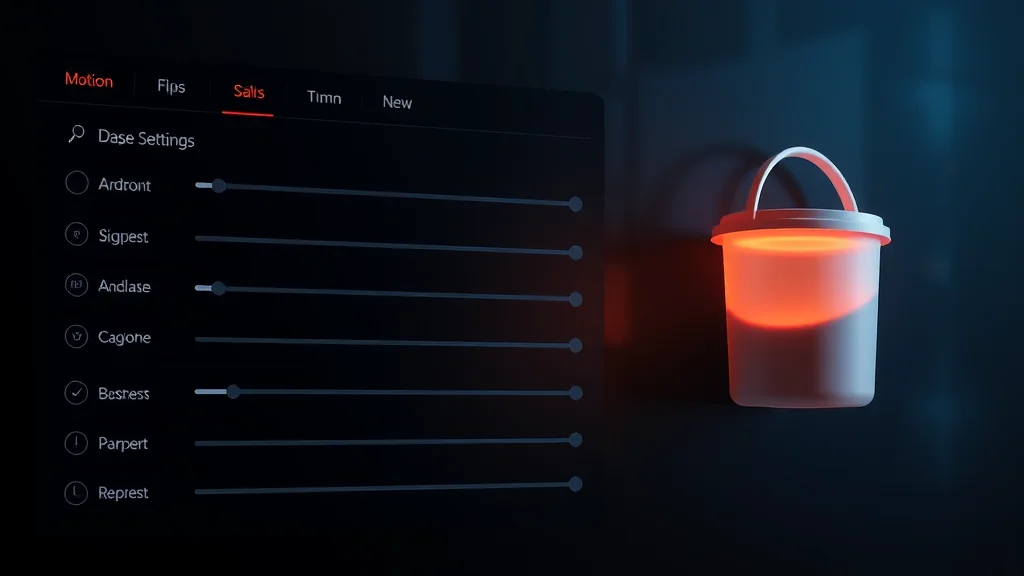
Once the graph is wired, three controls do most of the work. Get these right and you avoid most of the trial and error.
Motion bucket id
This is the master dial for how much movement SVD introduces. Low values around 30 to 80 give calm, restrained motion that stays close to your source. High values around 150 to 200 push aggressive movement that often introduces warping and limb distortion. For adult content where anatomical consistency matters, start low. A value near 100 to 127 is a sensible middle ground for most clips. Raise it only if the result looks frozen.
Frames per second and frame count
The fps setting in SVD is a conditioning value baked into the model, not a true playback rate. Values of 6 to 10 are typical. Lower fps tells the model to expect larger motion between frames, higher fps tells it to expect smaller steps. Frame count is fixed by your checkpoint choice, 14 or 25. You extend perceived length later through interpolation rather than by asking SVD for more frames than it supports.
Augmentation level and CFG
Augmentation level adds noise to the conditioning image. Keep it near zero for faithful clips and raise it slightly only if you want the model to deviate more from the source. CFG (the motion guidance scale) sits comfortably between 2.5 and 3.5 for most runs. Pushing CFG too high tends to oversaturate and distort.
VRAM, speed, and where to run it
SVD-XT at 1024×576 runs on roughly 10 to 12 GB of VRAM, which means an RTX 3060 12 GB or better handles it. The base 14 frame variant is lighter still. Generation time depends heavily on resolution and your sampler step count, but a single short clip on a mid range card is usually a matter of minutes, not seconds.
If your card cannot fit SVD-XT, or you want to batch many clips quickly, renting a cloud GPU is cost effective. Our cloud GPU rental for NSFW AI 2026 guide covers providers, pricing, and how to keep your workspace private. A short hourly rental on a larger card lets you run higher resolutions and longer interpolated outputs without buying hardware.
SVD versus the newer open video models
SVD is no longer the only open option, and in 2026 it is the lightweight veteran rather than the quality leader. Here is how it stacks up against the two models most creators reach for now.
| Model | Typical VRAM | Max native frames | Motion quality | Ease of setup | Best for |
|---|---|---|---|---|---|
| Stable Video Diffusion (SVD-XT) | 10 to 12 GB | 25 | Subtle, can warp on high motion | Easiest, built into ComfyUI | Light animation of existing stills |
| Wan | 12 to 24 GB depending on variant | Longer sequences | Strong coherence, good detail | Moderate, needs custom nodes | Text-to-video and longer clips |
| Hunyuan Video | 16 to 24 GB and up | Longer sequences | Highest detail and realism | More involved, heavier weights | Quality-first work with a capable GPU |
Wan from the Wan-AI team supports both text-to-video and image-to-video and tends to hold coherence across longer sequences better than SVD. Hunyuan Video from Tencent generally produces the most detailed and realistic motion of the three, at the cost of higher VRAM and a more involved setup. SVD wins on simplicity and low hardware demand, which is exactly why it remains a fine starting point.
If you want a broader survey of the field, our roundup of the best NSFW AI image-to-video generators compares local and hosted options side by side.
Fixing flicker, warping, and artifacts
Early SVD clips often look unstable. These are the common failure modes and the practical fixes.
Flicker between frames
Frame to frame flicker usually comes from too much motion or a noisy source. Lower the motion bucket id first. If the subject itself flickers in texture or color, your source image may be too small or too compressed. Generate the still at a higher resolution and run a light denoise pass before feeding it to SVD.
Limb and face warping
Warping appears when SVD tries to invent movement it cannot resolve cleanly, common with hands and faces. Reduce motion bucket id, keep the starting pose simple, and favor compositions where the subject is centered and unobstructed. SVD handles a calm upper body shot far better than a complex full body action pose. Strong anatomical consistency in your source carries through, so techniques from our NSFW character consistency techniques 2026 guide pay off here too.
Banding and low detail
If the clip looks soft or shows color banding, the fix is post processing rather than regeneration. Upscale the video and interpolate frames as described below.
Upscaling and smoothing the final clip
A raw SVD clip at 1024×576 and 14 to 25 frames looks short and a little choppy. Two post steps transform it.
First, frame interpolation. Add an interpolation node pack to ComfyUI and use it to insert generated in-between frames. Going from 25 frames to 60 or more produces fluid motion and a longer apparent runtime from the same source. Second, upscaling. Run the output through a video upscaler node to lift the resolution to 1080p. Do interpolation before or after upscaling depending on your VRAM headroom; interpolating first on the smaller frames is usually lighter.
The combination of a clean high resolution source, conservative motion settings, interpolation, and upscaling is what separates an amateur SVD clip from a polished one. None of these steps require new models, just the right node setup.
Understanding how SVD reads motion
It helps to know what SVD is actually doing under the hood. The model was trained on video clips and learned to predict plausible short-term motion from a single frame. It does not understand the scene the way a human does; it estimates how pixels are likely to move based on patterns it saw in training. That is why simple, common subjects animate well while unusual poses or complex interactions produce errors. The motion bucket id and fps values are essentially hints that tell the model how much movement to expect, nudging its prediction toward calm or energetic motion. Once you internalize that SVD is guessing at motion rather than choreographing it, the settings make more sense and you stop expecting precise control the model cannot offer. You guide its guess; you do not direct it frame by frame.
Resolution and aspect ratio considerations
SVD has preferred working resolutions, and straying far from them degrades quality. The common landscape and portrait sizes the model was trained around give the cleanest results, so match your source still to one of these rather than feeding an arbitrary crop. Portrait orientation suits short-form mobile content, while landscape fits wider viewing. If your final destination needs a different aspect ratio, it is usually better to generate at a supported size and crop afterward than to force an unusual ratio through the model. Upscaling at the end lets you start at a memory-friendly resolution and finish at 1080p, which is the efficient path on consumer hardware. Planning the format before you render saves you from regenerating a clip that does not fit where it needs to go.
Choosing the right source image
Because SVD only animates what you give it, source selection is the most important decision you make. Favor a clear, well lit composition with the subject centered and unobstructed. Avoid busy backgrounds, heavy occlusion, and extreme poses, since these give the model little stable structure to work from and invite warping. Resolution matters too: a source generated at the same resolution you intend to render avoids scaling artifacts. Clean anatomy in the still carries directly into clean motion, while any distortion in the source is amplified across every frame. Spending an extra few minutes to produce a strong source still saves far more time than fighting a flickering clip afterward.
Batch generation and seed control
SVD introduces randomness, so the same source and settings can produce different motion on different runs. This is useful. Generate several variations from one source by changing the seed, then pick the cleanest result rather than trying to perfect a single render. Keeping a note of the seed that produced a good clip lets you reproduce or fine tune it later. For creators producing many clips, batching several seeds in one session and reviewing them together is far more efficient than iterating one at a time. Treat the first pass as exploration and the second as selection.
When SVD is enough and when to upgrade
SVD remains the right tool when you want to add gentle life to existing stills on modest hardware with minimal setup. Hair movement, cloth sway, subtle camera drift, and small pose shifts are exactly its strength. It starts to fall short when you need longer scenes, dramatic motion, native text-to-video, or the highest possible detail. At that point the extra VRAM of Wan or Hunyuan Video pays off. Many creators keep SVD in the toolkit permanently for quick animation work and reach for the heavier models only when a specific clip demands more. There is no need to abandon SVD just because newer models exist; it does its narrow job well.
A repeatable SVD workflow
Put together, a reliable loop looks like this. Generate a strong, high resolution still with your preferred checkpoint, ideally using the free generator on our homepage or a local SDXL or Pony setup. Load SVD-XT in ComfyUI. Set motion bucket id near 100, fps around 7, CFG around 3, augmentation near zero. Render. Review for flicker or warping and lower motion if needed. Interpolate to a higher frame count, then upscale to 1080p. Export.
Once that loop is muscle memory, you can iterate quickly and decide whether SVD is enough for your work or whether the longer, sharper output of Wan or Hunyuan Video justifies the extra VRAM. For many creators, SVD remains the easiest on-ramp to local NSFW video, and it runs on hardware you may already own.
Frequently asked questions
How much VRAM do I need to run Stable Video Diffusion locally?
SVD-XT at 1024×576 runs comfortably on about 10 to 12 GB of VRAM, so an RTX 3060 12 GB or better is enough. The base 14 frame variant is even lighter. For higher resolutions or batch runs, a larger card or a short cloud GPU rental gives you more headroom and faster results.
Can Stable Video Diffusion generate video from a text prompt alone?
No. SVD is an image-to-video model, so it needs a starting still image and animates motion from it. It has no native text prompt for directing movement in the base model. If you want true text-to-video, look at newer open models like Wan, which supports both text-to-video and image-to-video.
What is motion bucket id and what value should I use?
Motion bucket id controls how much movement SVD introduces. Low values around 30 to 80 give calm, faithful motion, while high values near 150 to 200 push aggressive movement that often warps limbs and faces. For anatomically clean NSFW clips, start near 100 to 127 and raise it only if the output looks frozen.
Why does my SVD clip flicker between frames?
Flicker usually comes from too much motion or a low quality source image. Lower the motion bucket id first. If textures or colors flicker, your source may be too small or compressed, so regenerate the still at higher resolution and apply a light denoise pass before feeding it into SVD for smoother, more stable output.
How do I make an SVD clip longer and smoother?
SVD outputs only 14 or 25 native frames, so you extend it with frame interpolation rather than asking for more frames. Add an interpolation node pack in ComfyUI to insert in-between frames, then upscale the result to 1080p. This produces fluid motion and a longer apparent runtime from the same short source.
Is SVD better than Wan or Hunyuan Video for NSFW work?
SVD wins on low VRAM and the easiest setup, since it is built into ComfyUI. Wan holds coherence better across longer clips, and Hunyuan Video generally produces the most detailed, realistic motion. If you have a capable GPU and want quality first, the newer models edge out SVD, but SVD remains the simplest on-ramp.
Where do I download the Stable Video Diffusion model safely?
Get the weights from Stability AI’s official channels. The two main variants are the base SVD checkpoint at 14 frames and SVD-XT at 25 frames. Most creators use SVD-XT because the longer sequence interpolates more smoothly. Place the safetensors file in your ComfyUI checkpoints folder and refresh the model list.
Why are hands and faces warping in my generated video?
Warping happens when SVD tries to invent motion it cannot resolve cleanly, which most often affects hands and faces. Reduce the motion bucket id, keep the starting pose simple and centered, and use a source image with strong anatomical consistency. Calm upper body shots animate far more reliably than complex full body action poses.