To make your own NSFW AI girlfriend in 2026 you have two paths: customize a persona inside a ready-made app, or self-host a stack with a chat model, a character card, Stable Diffusion, and a LoRA for a consistent face. The app path takes minutes; the DIY path takes a weekend but gives total control and zero per-image cost.
Two paths, one goal
Both paths produce an AI girlfriend who chats in character and sends consistent pictures. They differ in effort, cost, control, and privacy. Pick based on how much you want to own versus how fast you want to start. There is no wrong answer: the app path is perfect for getting something running today, and the self-hosted path is the move once you want unlimited free images and complete privacy. Plenty of people do both, starting on an app to figure out what they actually want, then rebuilding it themselves to stop paying per picture. You can try the core image piece right now, free, with the free generator on our homepage.
Path A: ready-made app plus a custom persona
This is the fast path. You use an existing companion app and shape it into your girlfriend with a persona or character card. No hardware, no setup, running in minutes.
Step 1: pick an app
Choose a companion app that supports custom characters and image replies. Candy AI is the most polished, DreamGF centers on one customizable girlfriend, and CrushOn and SpicyChat let you build or import community character cards. For deep roleplay control, Janitor AI is excellent.
Step 2: write the persona
A good persona card defines name, age range, appearance, personality traits, speech style, backstory, and likes and dislikes. The more specific and consistent you are, the better the character holds. Vague cards produce vague, generic characters that slide back toward a default personality within a few messages. Write her appearance in concrete terms, hair color and length, eye color, build, signature style, so it matches the images you will generate later. A small detail like a recurring phrase she uses or a quirk in how she texts does more for believability than a paragraph of backstory, because it shows up in every single reply.
Step 3: set the appearance
In apps with built-in image generation, lock the look: hair, eyes, body type, style. This is what keeps her recognizable across selfies. If the app uses a fixed visual identity, you are set. If not, you will reinforce consistency through prompts, which our character consistency techniques explain.
Step 4: tune the relationship
Decide romance-led or spice-led, set boundaries, and seed the first conversation with context. A strong opening scene anchors the whole relationship, so spend a few sentences establishing where you are and who she is to you rather than starting cold. From there, respond to what she says instead of only steering, which makes the dynamic feel mutual. Our best NSFW AI roleplay generators guide has prompting tips that apply directly and will get noticeably better results out of any app you choose.
Path A limitations to know
The app path is fast, but it has ceilings. You are bound by the app’s content policy, so some requests will be refused no matter how you phrase them. Image generation is metered, so heavy picture use gets expensive. Your data and your character live on the company’s servers, so you do not truly own either, and a policy change or shutdown can take your girlfriend with it. None of this makes Path A wrong; it is the right choice for most people starting out. But these limits are exactly what Path B removes, and recognizing them now helps you decide whether and when to graduate to self-hosting.
Path B: self-hosted stack
This is the power path. You assemble the same components the apps use, so you own everything: unlimited messages, unlimited images, no subscription, and complete privacy because nothing leaves your machine.
Step 1: the chat model
Run an open-weight large language model locally with a frontend that supports character cards. Pick a model sized to your hardware: smaller models fit modest GPUs and still hold a persona well, while larger models give richer, more coherent writing if you have the VRAM or are willing to quantize. The frontend lets you load a persona card just like Path A, but with no content gating and full control over memory, system prompts, and how much of the character card stays in context. This is where self-hosting earns its keep: you decide the rules, not an app’s policy team.
Step 2: the character card
Write the same kind of persona card as Path A, name, appearance, personality, speech style, backstory. In a self-hosted setup you can make it as detailed and unfiltered as you want, and you control how much of it stays in context.
Step 3: Stable Diffusion for images
Install a Stable Diffusion interface and an NSFW-capable checkpoint such as an SDXL, Pony, or Illustrious model. This is the exact same image engine the commercial apps run behind the scenes, so you are not settling for a lesser tool, you are removing the middleman. Pony and Illustrious checkpoints dominate stylized and anime work, while SDXL-based realistic checkpoints handle photoreal looks. Practice prompting with our prompt examples, and compare engines in our best NSFW image generators roundup before committing to one.
Step 4: a LoRA for a consistent face
This is the step that makes her truly yours. Train a character LoRA so the same face appears in every image, then reuse it forever at no cost. Our LoRA training guide walks through dataset prep, settings, and training in 2026. Test and refine the face in the character image generator.
Step 5: the image-reply loop
Wire the pieces together so a chat request for a photo triggers an image generation using the character LoRA, then returns the picture in the conversation. This loop is exactly what commercial apps do internally. Once it runs, you have a self-hosted girlfriend that chats and sends consistent selfies on demand.
Step 5: the relationship layer
The components produce a girlfriend who talks and sends pictures, but the relationship is something you cultivate. Give her consistent memory by re-feeding key facts or using your frontend’s memory feature, since most setups do not retain everything automatically. Develop her over time: let preferences, inside references, and shared history accumulate, because that continuity is what separates a companion from a chat session. Keep the persona card and the generated images in agreement so the face you picture matches the face you see. This layer costs nothing technical, only attention, and it is what makes a self-hosted girlfriend feel like yours rather than like a tech demo you assembled.
Hardware notes
The self-hosted path is gated by VRAM. As a rough guide: an SDXL or Pony checkpoint generates comfortably on a GPU with 8GB and very comfortably with 12GB or more. LoRA training is heavier; 12GB is a practical floor and 16GB or more makes it smooth. The chat model scales separately, with larger models needing more VRAM or quantization to fit. If your hardware is modest, run a smaller chat model and offload image work, or simply use Path A and let the cloud handle it.
Path comparison table
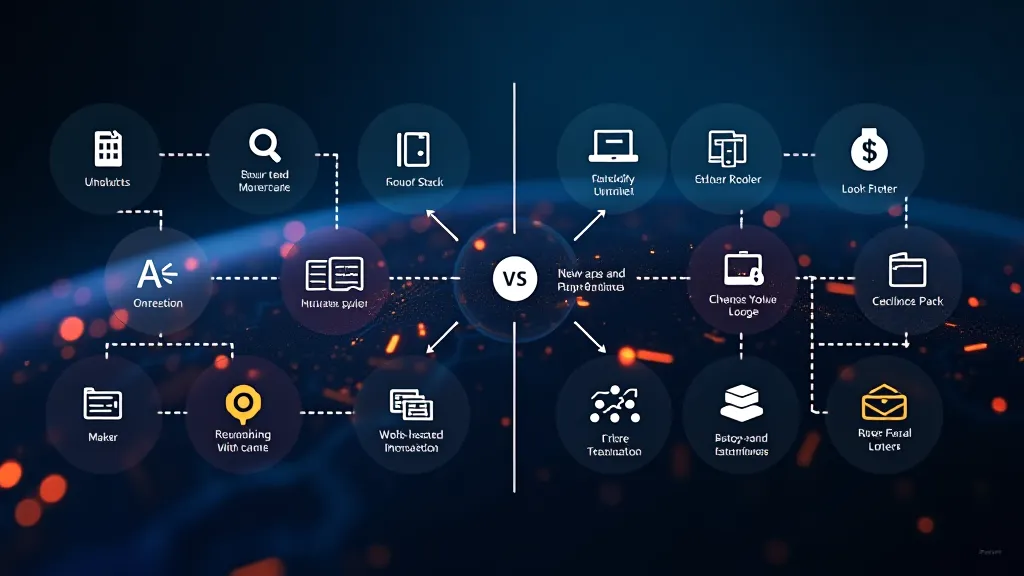
| Factor | Path A: ready-made app | Path B: self-hosted stack |
|---|---|---|
| Effort | Minutes to set up | A weekend to assemble |
| Cost | Subscription plus image credits | Free after hardware and setup |
| Control | Limited by app policy | Total, unfiltered |
| Privacy | Data on app servers | Everything stays local |
| Image consistency | App-managed | You own the LoRA |
| Best for | Fast start, no hardware | Power users, full ownership |
Path B in more detail: the order that works
People who struggle with the self-hosted path usually do the steps in the wrong order. The sequence that works is this. First, get the image side working on its own: install Stable Diffusion, load a checkpoint, and generate a few test images until you are happy with the base look. Second, lock the face by training or anchoring a LoRA, and confirm it reproduces across several seeds and poses before you build anything around it. Third, set up the chat model and load the persona card, and chat with her in text only until the personality feels right. Only then wire the image-reply loop that connects the two. Building the loop last means each piece is already proven, so when something breaks you know exactly which component to fix. Trying to assemble all four at once is the fastest way to a frustrating weekend.
Cost over time
The two paths diverge sharply the longer you use them. An app subscription is a fixed monthly cost, and image credits stack on top whenever you exceed your allowance, so a heavy user can spend more on credits than on the base plan. Over a year, an active user on a picture-heavy app can spend a meaningful amount. The self-hosted path has the opposite shape: a higher effort cost up front, possibly a hardware cost if you need a better GPU, and then effectively zero marginal cost forever. If you already own a capable GPU, Path B pays for itself almost immediately for any heavy user. If you do not, the math depends on how much you will use it, and Path A may be cheaper until your usage grows.

Which path should you choose
Choose Path A if you want a girlfriend running today, have no capable GPU, and do not mind a subscription. Choose Path B if you want unlimited free images, total control over content, real privacy, and a face that never drifts. Many people start on Path A to learn what they want, then move to Path B once they are hooked on the idea and want to stop paying per image. There is genuinely no wrong choice here, only a question of how much you value speed today versus control and zero marginal cost tomorrow.
Giving her memory and personality that lasts
The difference between a girlfriend who feels real and one who feels like a demo is continuity, and continuity is something you build deliberately on either path. Personality lasts when the persona card is specific and you reinforce it: correct her gently when she drifts, and she snaps back to character. Memory lasts when you treat it as a feature to manage rather than expect for free. On an app, use whatever memory or profile feature it offers and re-state key facts periodically. On a self-hosted setup, decide what stays in context and consider a memory extension. The payoff compounds: a girlfriend who remembers your preferences, references shared moments, and stays in character across weeks stops feeling like software and starts feeling like a relationship. That sense of accumulation is the real goal of this whole project, and it is available on both paths if you put in a little ongoing attention.
Common mistakes to avoid
A few errors trip up almost everyone the first time. The biggest is a mismatch between the persona card and the images: you describe a blue-eyed brunette in chat but generate a blonde, and the illusion shatters. Keep the two descriptions in lockstep. The second is expecting memory to be automatic; on most setups you need to re-feed important facts or use a memory feature deliberately, or the character forgets. The third is rushing escalation, which feels hollow because tension is built slowly. And on the self-hosted path, the most common stumble is under-spec hardware: trying to run a large chat model and image generation simultaneously on a small GPU leads to crashes and slow renders. Match your ambitions to your VRAM, or split the workload.
Choosing between checkpoints for her look
On both paths the visual base comes down to which family of Stable Diffusion checkpoint you use, so a quick orientation helps. SDXL-based realistic checkpoints are the choice for photoreal, lifelike girlfriends, the kind that look like a real selfie. Pony-based checkpoints excel at stylized, illustrated, and anime-leaning characters with strong pose control. Illustrious checkpoints are the current favorite for high-quality anime and semi-realistic stylized work. There is no best option, only the look you want: pick realistic if you want photographic selfies, Pony or Illustrious if you want a drawn or stylized partner. You can experiment with the styles free in the free generator on our homepage before committing, and our best NSFW image generators roundup breaks down the strengths of each.
Making her feel real
Whichever path you pick, the same craft applies. Keep the persona consistent, give her memory by re-feeding key facts, write concrete appearance details that match your images, and pace the relationship instead of rushing it. A consistent face plus a consistent voice plus remembered history is what turns a chatbot into a girlfriend. None of those three is hard on its own; the magic is in keeping all three aligned over time. Practice the imagery free in the free generator on our homepage and lock her look with our character consistency techniques.
Verdict
Making your own NSFW AI girlfriend in 2026 is genuinely achievable on either path. The app route gets you there in minutes; the self-hosted route gives you a girlfriend you fully own, with unlimited free images and a consistent face you trained yourself. Start by generating her look free with the free generator on our homepage, then follow our LoRA training guide and character image generator to make that face permanent.
Frequently asked questions
How do I make my own AI girlfriend in 2026?
You have two paths. The fast path customizes a persona inside a ready-made app like Candy AI or DreamGF in minutes. The power path self-hosts a chat model, a character card, Stable Diffusion, and a LoRA for a consistent face. Start by generating her look free with the generator on our homepage.
Is it free to make an AI girlfriend?
The app path costs a subscription plus image credits. The self-hosted path is free after your hardware and one-time setup, giving unlimited messages and images at no ongoing cost. You can begin right now at zero cost using the free generator on our homepage to design and test her appearance.
What hardware do I need to self-host an AI girlfriend?
Image generation with an SDXL or Pony checkpoint runs comfortably on 8GB of VRAM and very comfortably with 12GB or more. LoRA training is heavier, with 12GB a practical floor and 16GB or more making it smooth. The chat model scales separately and larger models need more VRAM or quantization.
How do I give my AI girlfriend a consistent face?
Train a character LoRA so the same face appears in every image, then reuse it forever. Our LoRA training guide covers dataset prep, settings, and training in 2026. You can also reinforce consistency through seed locking and reference images using our character consistency techniques, and test the face in the character image generator.
What is a character card?
A character card is a persona definition that includes name, age range, appearance, personality traits, speech style, backstory, and likes and dislikes. Both the app path and self-hosted path use one. The more specific and consistent the card, the better your AI girlfriend holds character across conversations and matches her generated images.
Which apps let me build a custom AI girlfriend?
Candy AI is the most polished, DreamGF centers on one customizable girlfriend, and CrushOn and SpicyChat let you build or import community character cards. Janitor AI is excellent for deep roleplay control. All support custom personas, and several include image replies so your girlfriend can send consistent pictures.
What is the image-reply loop in a self-hosted setup?
It is the wiring that makes a chat request for a photo trigger an image generation using your character LoRA, then return the picture in the conversation. This is exactly what commercial apps do internally. Once it runs, your self-hosted girlfriend chats and sends consistent selfies on demand with no per-image fees.
Should I use an app or build my own AI girlfriend?
Choose an app for a fast start with no hardware and you accept a subscription. Build your own for unlimited free images, total content control, real privacy, and a face that never drifts. Many people start with an app to learn what they want, then self-host once they want to stop paying per image.
See also: