Turning adult AI art into print merch means generating at true print resolution, upscaling to 300 DPI at the right poster or apparel aspect ratio, and selling through the few adult-friendly print-on-demand services or your own store, because most mainstream POD platforms ban NSFW content outright. Sell only original fictional adult art you own the rights to, never a real person’s likeness.
A gallery of great adult AI art is worth nothing on a hard drive. Physical merch, posters, art prints, wall art, and apparel turns it into a product people pay for and keep. The catch is that print has hard technical requirements that screen images ignore, and the adult subject matter closes most of the easy commercial doors. This guide covers generating and upscaling for print, which POD services actually allow adult content, bleed and margins, mockups, the copyright question for AI art sold commercially, and pricing. It is a business and production guide, described in tasteful terms throughout.
Generate and upscale for print resolution
Screens are forgiving; print is not. A web image at 72 DPI looks fine on a monitor and turns into a blurry mess on an A2 poster. Print wants roughly 300 DPI at the final physical size, which means far more pixels than a default generation gives you.
Do the math from the finished product backward. An A3 print at 300 DPI needs about 3508 by 4961 pixels. An A2 needs about 4961 by 7016. Most base generations come out around 1024 pixels on a side, nowhere near enough. So the workflow is: generate at a good base resolution, then upscale substantially with a quality upscaler.
- Generate your base image cleanly at the model’s native resolution, getting composition and detail right first.
- Upscale with a dedicated tool such as an ESRGAN-family model, an SDXL tiled upscale in ComfyUI, or a commercial upscaler, aiming for at least 4x.
- Run a light detail pass during upscale so the added pixels carry real texture, not just interpolation.
- Check the result at 100 percent zoom. Print reveals soft areas that screens hide.
Getting the base image right before upscaling matters, because upscaling amplifies flaws as much as detail. Our guide on how to get better NSFW AI results covers the generation quality that makes a print-worthy source, and starting from a strong realistic generator or a clean anime render gives the upscaler something worth enlarging.
Aspect ratios for posters and prints
Print sizes are fixed, and if your image aspect ratio does not match the product, it gets cropped or letterboxed, often through the most important part of the composition. Plan the ratio before you generate.
| Product | Common size | Aspect ratio | Pixels at 300 DPI |
|---|---|---|---|
| A2 poster | 420 by 594 mm | roughly 1:1.41 | about 4961 by 7016 |
| A3 print | 297 by 420 mm | roughly 1:1.41 | about 3508 by 4961 |
| 18×24 in poster | 457 by 610 mm | 3:4 | about 5400 by 7200 |
| Square print | 12×12 in | 1:1 | about 3600 by 3600 |
| Apparel graphic | varies | often tall or square | 4000 plus on long side |
Generate at the closest aspect ratio your model supports, then upscale, rather than generating square and cropping later. A composition framed for a tall poster from the start looks intentional; one cropped from a square looks accidental.
Which POD services allow adult content
This is the make-or-break issue, and it trips up most creators. The large, familiar print-on-demand platforms almost universally ban NSFW and adult content in their terms of service. Uploading it gets your designs rejected and your account suspended.
| POD service | Adult policy | Practical takeaway |
|---|---|---|
| Printful | Prohibits nudity and sexual content | Not usable for NSFW |
| Printify | Prohibits adult and explicit content | Not usable for NSFW |
| Redbubble | Restricts and often removes explicit work | Unreliable, heavy moderation |
| Society6 | Bans explicit content | Not usable for NSFW |
| Gelato | Prohibits pornographic content | Not usable for NSFW |
| Adult-friendly / niche POD | Some allow with age-gating | Read terms closely, verify |
| Self-fulfilled direct sales | You control policy | Most freedom, more work |
The honest picture is that mainstream POD is closed to adult work. Your realistic options are the small number of explicitly adult-friendly print services that permit age-gated NSFW, or a self-fulfilled model where you order prints from a local or online printer yourself and ship them, keeping the whole operation under your own control. Always read the current terms directly, because policies change and enforcement varies. Never try to sneak adult work onto a platform that bans it; the ban exists and it will find you.
Self-fulfilled and direct-sell as the reliable path
Because the platform door is mostly closed, many adult art creators go direct. You sell through your own storefront or an adult-friendly marketplace, take the order, then either fulfill through an adult-permitting printer or order prints yourself and ship them.
This is more work than clicking upload on a mainstream POD, but it gives you total control over what you sell and how, plus better margins since no platform takes a large cut. It also pairs naturally with an existing audience. If you already sell digital adult content, physical prints are a premium add-on for your best fans. Our guide on how to sell AI-generated NSFW content covers building that sales channel, which is the same channel your merch flows through.
Age-gating and compliance for direct sales
Running your own adult storefront comes with obligations the mainstream platforms would normally handle for you. You need genuine age verification at the point of entry, clear adult-content labeling, and a checkout and payment processor that permits adult goods, since many standard processors do not. Build the age gate before you take a single order, keep records straight, and make sure your fulfillment printer also knows and permits the nature of the work. Skipping compliance to launch faster is how direct-sell operations get shut down. Treat the legal and payment plumbing as part of the product, not an afterthought, and your store stays open.
Choosing what art becomes merch
Not every generation deserves to be a print. The pieces that sell as physical merch tend to share traits: a strong single focal subject, a composition that reads at a distance, a limited and confident color palette, and enough negative space to feel like wall art rather than a screenshot. Busy, cluttered images that work on a screen often look chaotic at poster size. Before committing an image to the print pipeline, ask whether someone would actually hang it on a wall or wear it, because that is a higher bar than merely looking good in a feed. Curate ruthlessly; a tight collection of ten genuinely print-worthy pieces outsells a sprawling catalog of mediocre ones, and it makes your store look like an intentional brand.
Bleed, margins, and safe zones
Print has physical tolerances that screens do not. Two concepts you must design around:
- Bleed. Printers cannot cut perfectly to the edge, so artwork that should reach the edge must extend a few millimeters beyond the final trim line, usually 3mm. Without bleed you risk thin white slivers at the edges. Add bleed by generating or extending the image slightly larger than the final size, or by outpainting the edges.
- Safe zone and margins. Keep important content, faces, focal points, any signature or text, well inside the trim line, typically 3 to 5mm in. Anything near the edge risks being cut.
For apparel, add a further consideration: the printable area is smaller than the garment, and graphics need clean edges. A transparent background, made with a tool like rembg, is essential so the design sits on the fabric rather than in a colored box. Plan these tolerances before you finalize a file, because fixing them after upscaling means redoing work.
Mockups that sell
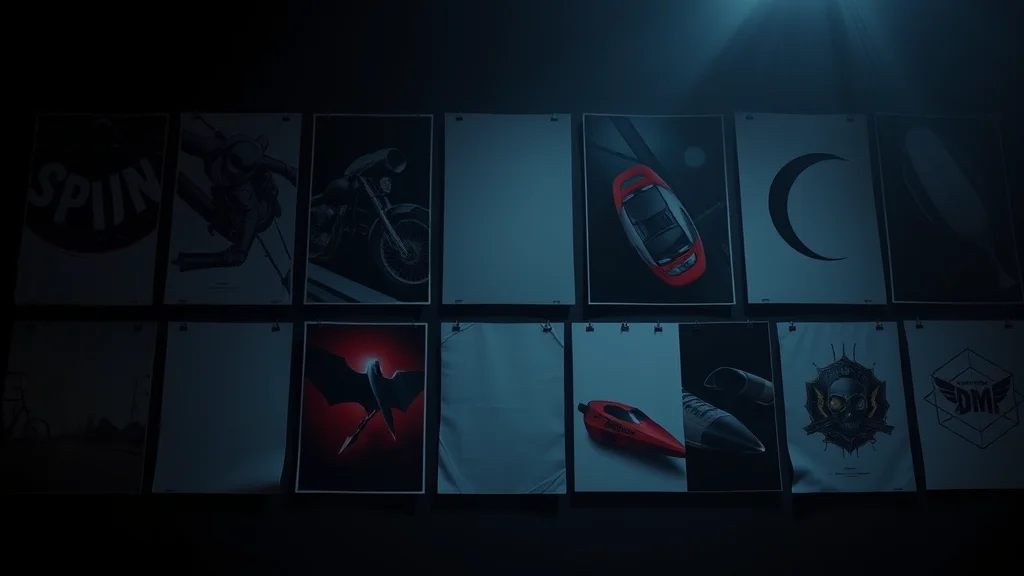
Buyers cannot hold your print, so the mockup does the selling. A flat image floating on a white page converts poorly; a poster shown framed on a styled wall, or a shirt shown on a model or flat-lay, converts far better because the buyer pictures owning it.
Generate or use mockup templates: your artwork composited onto a framed poster on a wall, rolled up, or on apparel in context. Many mockup generators exist, and you can also composite in any image editor. Keep the mockup tasteful and the styling consistent across your catalog so your store looks like a real brand. Good mockups routinely lift conversion more than any change to the artwork itself, so it is worth the effort on every product. Show scale too, a poster next to furniture or a shirt worn in context, so buyers understand the physical size they are ordering and are not surprised when it arrives.
Copyright of AI art for commercial sale
The legal status of AI-generated art is genuinely unsettled and varies by country, so approach commercial sale with clear eyes. In several jurisdictions, purely AI-generated images with no meaningful human authorship may not qualify for copyright protection, which means you may not be able to stop others from copying your exact design. That does not make it illegal to sell, but it does affect how defensible your work is.
A few practical points, and note this is general information, not legal advice:
- Adding substantial human creative input, composition, heavy editing, compositing, and curation, strengthens any authorship claim.
- Original fictional characters you design and refine are safer to sell than anything derived from someone else’s IP.
- Never sell art depicting a real person’s likeness or any existing copyrighted or trademarked character.
Our overview of AI image copyright goes deeper on the current landscape. The safe posture: sell only original work, add real human craft, and understand that enforceability against copycats may be limited.
Pricing your merch
Pricing print merch means covering costs and reflecting value. Start from your true cost: print cost plus shipping plus any platform fee plus packaging. Then set a price that leaves a healthy margin and matches the perceived quality.
A rough framework:
- Art prints (A4 to A3): typically priced at a multiple of print cost, with room for premium framing or paper upgrades.
- Large posters (A2 and up): command higher prices; the size itself signals value.
- Apparel: price above blank plus print cost, factoring the design’s appeal.
- Limited editions: numbered, small runs justify a significant premium and reward your most dedicated buyers.
Bundle and tier where it makes sense: a digital-plus-print bundle, or a print included with a subscription tier, both of which raise the average order value while giving buyers a reason to choose the higher option. Because adult niche merch has less competition than mainstream print-on-demand, you often have more pricing latitude than generic art, provided the quality and presentation justify it.
Color and paper: getting the physical result right
A print that looked perfect on your monitor can disappoint in hand if you ignore two physical realities. The first is color space. Screens are RGB and printers are CMYK, and vivid RGB colors, especially saturated blues and neon tones, can shift or dull when converted for print. Soft-proof your files in CMYK before ordering and adjust anything that shifts badly, or order a test print first. The second is paper stock. The same image looks different on glossy, matte, and textured fine-art paper. Glossy pops color and suits vivid work; matte reads as more premium and art-like; heavy fine-art stock justifies a higher price. Order samples on a few stocks and standardize on the one that flatters your style, then advertise it as a feature. Buyers of art prints care about paper, and naming your stock signals quality.
Always order a physical proof of a new design before listing it for sale. What the screen promises and what the printer delivers are not always the same, and catching a soft area, a color shift, or a cropping problem on your own copy is far cheaper than discovering it through a customer refund.
Protecting your work
Once your art is out as merch, it can be copied. Watermark your promotional images (not the final print), keep your high-resolution master files private, and register your storefront presence so buyers know the real source. Given the shaky copyright footing of AI art, practical deterrence matters more than legal threats. Our guide on how to protect AI content from theft covers the tactics that actually reduce casual copying.
Bringing it together
Selling adult AI art as physical merch is very doable, but it rewards planning. Generate at the right aspect ratio, upscale to true 300 DPI, and design in bleed and safe zones from the start. Accept that mainstream POD is closed to adult work and build on adult-friendly services or a self-fulfilled direct-sell model instead. Sell mockups, not floating flats. Keep everything original and adult, understand the unsettled copyright picture, and price for the value your niche supports. Do all that and a folder of great generations becomes a real product line, one your best fans are happy to hang on a wall.
Start with a single product to learn the pipeline end to end. Pick one strong image, take it through the full process: right aspect ratio, upscale to 300 DPI, bleed and safe zones, a physical proof, a good mockup, and a listing on your storefront. Once one product is live and correct, every additional design follows the same proven steps and the marginal effort drops sharply. The first print teaches you the tolerances your printer needs and the settings your upscaler likes; after that, scaling to a full collection is mostly repetition. Keep the work original and adult, respect each sales channel’s rules, price for your niche, and adult AI merch becomes a durable revenue stream rather than a one-off experiment.
Frequently asked questions
What resolution do I need to print AI art?
Aim for about 300 DPI at the final physical size. An A3 print needs roughly 3508 by 4961 pixels and an A2 needs about 4961 by 7016. Base generations near 1024 pixels are far too small, so generate cleanly then upscale at least 4x with a quality upscaler.
Can I sell NSFW AI art on Printful or Printify?
No. Printful, Printify, and nearly all mainstream print-on-demand platforms prohibit nudity and sexual content in their terms of service. Uploading adult work gets designs rejected and accounts suspended. Use adult-friendly niche print services or a self-fulfilled direct-sell model instead.
Which print-on-demand services allow adult content?
Most large platforms ban it. Your realistic options are the small number of explicitly adult-friendly print services that permit age-gated NSFW, or self-fulfillment where you order prints yourself and ship them. Always read the current terms directly, since policies and enforcement change.
What aspect ratio should I generate for a poster?
Match the product before you generate. A and B series sizes are roughly 1:1.41, while common US posters are 3:4. Generate at the closest ratio your model supports then upscale, rather than generating square and cropping, which risks cutting through your composition.
Do I need bleed and margins for print?
Yes. Extend artwork about 3mm beyond the trim line as bleed so cutting does not leave white slivers, and keep important content 3 to 5mm inside the edge in the safe zone. For apparel, use a transparent background made with a tool like rembg so the design sits cleanly on the fabric.
Can I copyright AI-generated art I sell?
The status is unsettled and varies by country. Purely AI-generated images with no meaningful human authorship may not qualify for copyright in some jurisdictions, which limits your ability to stop copycats. Adding substantial human editing and selling only original characters strengthens your position. This is general information, not legal advice.
How should I price adult AI merch?
Start from true cost: print, shipping, fees, and packaging, then add a healthy margin matched to perceived quality. Large posters and numbered limited editions command premiums. Adult niche merch faces less competition than generic print-on-demand, so you often have more pricing latitude when quality and presentation justify it.
Why do mockups matter for selling prints?
Buyers cannot hold your print, so the mockup does the selling. A poster shown framed on a styled wall or a shirt on a model converts far better than a flat floating image, because the buyer pictures owning it. Good mockups often lift conversion more than changes to the artwork itself.