To make a believable luxury bathroom NSFW AI scene, build the room: a freestanding tub, a large mirror, marble tile, folded towels, and a window. Light it with soft diffused daylight from the window. Place the subject at or in the tub, keep the mirror physically plausible, then fix warped mirrors, impossible reflections, and garbled tile grids in post.
Why a luxury bathroom is deceptively hard
A luxury bathroom looks like an easy win. It is bright, clean, and static, with none of the dark chaos of a club or the churning water of a hot tub. But it hides two of the nastiest problems in AI image generation: mirrors and repeating tile grids. A large mirror invites the model to render a reflection, and reflections are physics puzzles that image models routinely get wrong. The reflected subject faces the wrong way, shows the wrong side, appears where no reflection could exist, or morphs into a second, different person. Meanwhile, marble tile is a regular grid of lines, and models are notoriously bad at regular grids, so the tile drifts, the grout lines bend, and the pattern melts as it recedes.
The other trap is confusing a bathroom with a shower. A shower scene is a running water, glass stall, steam on glass affair. A luxury bathroom is the room: the freestanding tub as a centerpiece, the vanity and large mirror, the marble, the window with soft daylight. It is calmer, brighter, and more architectural. If you want the room to read as a spa like bathroom rather than a wet shower box, you build the tub, the mirror, and the tile deliberately and light it with soft daylight. This guide covers the props, the lighting, the staging, a copy paste prompt, and the specific fixes for mirrors, reflections, and tile.
If you have not prompted interiors much, the setting prompt tags guide gives a foundation before the bathroom specifics.
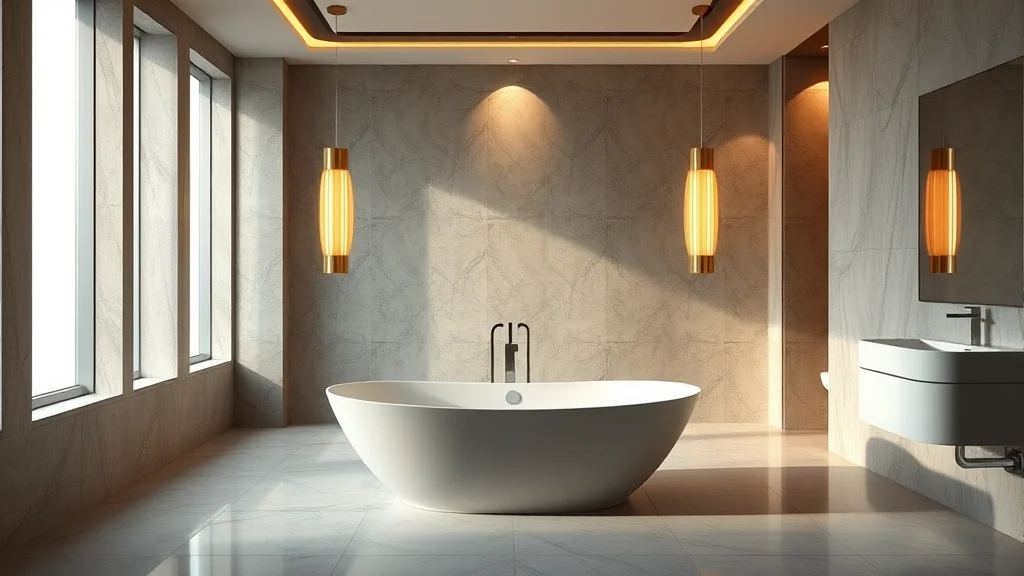
The setting and prop prompt tags
A luxury bathroom reads through a handful of signature props: a freestanding tub, a large framed mirror, marble tile and walls, folded towels, a vanity, and a window. Lead with the room and the tub, then the surfaces, then the light, then the details.
Here is a tag table to pull from. Choose a few per row.
| Element | Strong prompt tags |
|---|---|
| The room | luxury bathroom, modern spa bathroom, marble bathroom, elegant ensuite, bright airy bathroom |
| Centerpiece | freestanding bathtub, standalone soaking tub, clawfoot tub, deep white tub |
| Surfaces | marble tile, marble walls, polished stone floor, veined marble, subway tile accent |
| Mirror and vanity | large framed mirror, backlit vanity mirror, floating vanity, stone countertop |
| Soft goods | folded white towels, plush bath mat, robe on a hook, rolled towels |
| Window and light | large window, soft daylight through sheer curtains, frosted window, natural light |
The tokens that set the identity are “freestanding bathtub” and “large window with soft daylight.” The tub makes it a bathroom rather than a shower, and the soft window light sets the calm, bright, spa like mood. Marble and the mirror complete the luxury read.
Be deliberate about the mirror. If you do not need a reflection of the subject in frame, angle the mirror so it reflects the wall, the window, or empty tile rather than the subject. That single choice sidesteps the hardest problem in the whole scene. For more on the calm, clean register, the mood and atmosphere prompt tags add words like “serene,” “clean,” and “spa like.”
How to light a luxury bathroom
The defining light is soft, diffused daylight from a window. This is a big, gentle source that wraps the subject in flattering, low contrast light and makes marble glow. Prompt “soft diffused daylight,” “natural light through sheer curtains,” and “bright airy light.” A frosted or sheer window softens the sun into an even wash, which is exactly the spa look you want.
Keep contrast gentle. A luxury bathroom is not a dramatic scene; it is bright and clean. Avoid hard shadows and flash. The soft daylight should give the subject a smooth gradient across the skin and a gentle sheen on the marble and the tub. This is close to a soft window portrait, so the phrasing in the lighting prompt reference transfers well.
If you want a slightly warmer, sunlit version, push toward morning light coming through the window, which overlaps with a golden hour approach softened by curtains. For the clean, bright grade that suits marble and white towels, the color grading prompt tags help keep whites clean without going flat. If you want that crisp editorial daylight feel with a touch more punch, a DSLR realistic build pairs naturally with this scene.
Direction of the window light shapes the mood more than its brightness. Light coming from the side (a window off to one frame edge) gives the subject a soft gradient across the body and gentle modeling on the marble, which looks natural and dimensional. Light coming straight from behind the camera flattens everything and reads as a snapshot. So place the window to one side and let the far side of the room fall into a soft shadow. That gentle side to shadow gradient is what gives an otherwise flat bright room its sense of volume, and it keeps the marble from looking like a printed backdrop. Prompt the window position explicitly, for example “soft daylight from a window on the left,” so the model commits to a direction.
Staging, subject placement, and depth
Place the subject at or in the freestanding tub: seated in the tub, perched on the rim, or standing beside it reaching for a towel. The tub is the anchor, so keeping the subject connected to it grounds the composition. If the subject is in the tub, give a clear waterline so she does not float, the same principle as any water scene.
Build depth with the room. Foreground can be the near edge of the tub or the vanity. Midground is the subject. Background is the window, the marble wall, and the mirror. A modest depth of field keeps the room readable while softening the far tile just enough to hide grid errors. The window in the background gives a bright anchor that reads as depth and airiness.
For angle, eye level or a slightly high angle looking down into the tub works well and keeps the tile and floor in a natural perspective. Avoid extreme wide angles, which exaggerate the tile grid and make the mirror and walls warp more. The camera angle prompt tags list the tokens. Keep the subject an original adult character. If a mirror reflection is in frame, treat it as something to verify and fix, not something to trust.
Composition wise, let the tub anchor the lower two thirds of the frame and use the window and mirror as bright accents in the upper third. A luxury bathroom is fundamentally a clean, uncluttered space, so resist filling every surface. A single robe on a hook, a stack of rolled towels, and a small plant are plenty. Empty polished surfaces are part of the luxury read, and they also give the model fewer objects to warp. Keep the counter mostly clear, keep the floor mostly clear, and let the marble and the soft light do the work. Negative space is a feature here, not a gap to fill.
A full copy paste example prompt
Here is a complete positive and negative block for a bright luxury bathroom.
Positive:
photorealistic, an adult woman seated on the rim of a freestanding soaking tub in a luxury marble bathroom, large window with soft diffused daylight through sheer curtains, veined marble walls and floor, folded white towels, large framed mirror reflecting the window, bright airy serene spa atmosphere, clean natural light, gentle soft shadows, moderate depth of field, 50mm lens look, detailed skin texture, clean bright color grade

Negative:
warped mirror, double reflection, wrong reflection, impossible reflection, second person in mirror, bent tile lines, melted tile grid, distorted grout, dark moody lighting, harsh flash, running water shower, extra limbs, deformed hands, watermark, text, lowres, cartoon, plastic skin
Note the mirror is set to reflect the window, not the subject, which avoids the reflection puzzle. Swap the subject for an adult man or a couple, and adjust the marble color and tub style to taste. For a consistent character across several bathroom shots, run the set through a consistent photo set workflow or one of the character consistency techniques.
Sampler, CFG, and checkpoint notes
A bright, detailed room with fine marble veining and tile rewards a sampler that resolves clean detail. DPM++ 2M Karras at 30 to 35 steps is a reliable baseline. If the tile or marble looks noisy, a few more steps or a switch to DPM++ SDE Karras can clean it up.
Keep CFG moderate, around 5 to 7. A bright scene with a lot of white marble and towels clips easily at high CFG, blowing the whites to featureless paper and hardening the soft daylight. Lower CFG keeps the whites clean with detail and preserves the gentle light. The CFG and sampler settings guide covers this.
For the checkpoint, a realism model gives the best skin under soft light and the most coherent architecture and tile. epiCRealism and RealVisXL both do bright interiors and marble well. For Pony based anatomy control, CyberRealistic Pony works. See the wider checkpoint roundup for more.
| Setting | Recommended start | Notes |
|---|---|---|
| Sampler | DPM++ 2M Karras | SDE Karras or more steps for clean tile |
| Steps | 30 to 35 | Higher steps help marble veining |
| CFG | 5 to 7 | Low CFG keeps whites clean, not blown |
| Resolution | 832×1216 portrait | Upscale after rendering |
| Checkpoint | epiCRealism or RealVisXL | Realism model for skin plus architecture |
Where it breaks and how to fix it
Four failures dominate bathroom renders, and three of them involve mirrors and tile. Here is how to catch and repair each.
Warped mirror frame
The mirror frame bends, curves, or fails to form a clean rectangle. A mirror is architecture, and architecture warps. The fix is to inpaint straight frame lines and square up the rectangle, or crop so less of the mirror shows. Adding “large framed mirror” and “rectangular mirror” helps, and “warped mirror” belongs in the negative. The photo editing workflow covers the masking approach for straightening frames.
Impossible or double reflections
The reflection in the mirror shows the wrong side of the subject, a second different person, or a reflection that could not physically exist from that angle. This is the single hardest bathroom problem. The best fix is prevention: angle the mirror to reflect the window, the wall, or empty tile instead of the subject, as in the example prompt. If a broken reflection still appears, inpaint the mirror to show a plausible reflection of the room (not the subject), or paint the mirror as a simple reflected wash of the window light. Never leave a garbled second person in the glass. Put “double reflection,” “wrong reflection,” and “second person in mirror” in the negative.
Garbled or bent tile grid
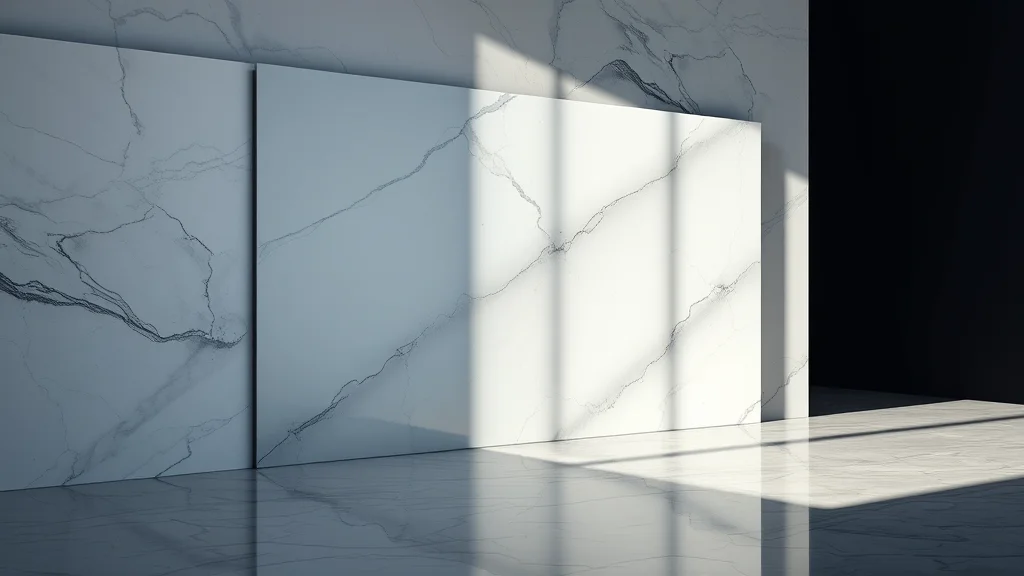
The marble tile drifts, the grout lines bend, and the pattern melts as it recedes into the room. Models struggle with regular grids. Mitigate it with a moderate depth of field so the far tile softens, and avoid extreme wide angles that exaggerate the grid. When lines still bend, inpaint straight grout lines back in over the worst areas, or choose large format marble slabs (fewer lines) over small mosaic tile, which has far more grout to break. Prompt “large marble slabs” instead of “small mosaic tile” if the grid keeps failing.
Confused or hybrid fixtures
The model sometimes merges the tub, the sink, and the shower into an impossible hybrid fixture, or gives the freestanding tub built in plumbing that makes no sense. Keep the fixtures separated in the prompt and in the composition: name the freestanding tub as the clear centerpiece and put the vanity and sink to one side rather than overlapping. If a hybrid appears, inpaint the offending area to restore a clean single fixture, or crop to exclude the confused element. Simpler fixture layouts render more reliably, so do not crowd three plumbing fixtures into one frame.
Blown out whites and flat light
The white marble and towels blow out to featureless paper, or the soft daylight goes flat and lifeless. Lower your CFG so the whites keep detail, and add “soft gentle shadows” to reintroduce dimension. In post, pull the highlights down in your editor to recover texture in the marble and towels, and add a subtle contrast curve to bring the soft light back to life. If the whole frame is soft, run the blurry image fix, and the get better results guide has more on balancing bright scenes.
Conclusion
A luxury bathroom NSFW scene is an architecture and physics test disguised as an easy bright room. Build the freestanding tub, the marble, the mirror, and the window, and light it with soft diffused daylight for that calm spa feel. The two things that will betray you are the mirror and the tile grid, so plan around them: angle the mirror to reflect the window instead of the subject, keep the far tile soft with depth of field, and prefer large marble slabs over busy mosaic. Ground the subject at the tub, keep CFG low so the whites stay clean, and inpaint any warped frames, broken reflections, or bent grout rather than rerolling. Do that and your bathroom will read as a bright, expensive, believable room. For the running water alternative, compare with the shower scene guide, and for the calmer private interior, the bedroom scene guide.
Frequently asked questions
How do I stop the mirror reflection from breaking in a bathroom scene?
The best fix is prevention: angle the mirror to reflect the window, wall, or empty tile instead of the subject. Reflections of the subject are physics puzzles the model routinely gets wrong. If a broken reflection still appears, inpaint the mirror to show a plausible reflection of the room, or paint it as a simple wash of the window light. Never leave a garbled second person in the glass.
Why does my marble tile look bent and melted?
Models are bad at regular grids, so grout lines drift and bend as the tile recedes. Use a moderate depth of field so the far tile softens, and avoid extreme wide angles that exaggerate the grid. Prefer large marble slabs over small mosaic tile since fewer grout lines means fewer things to break. When lines still bend, inpaint straight grout lines back in over the worst areas.
How do I make a bathroom scene instead of a shower scene?
Build the room around a freestanding tub as the centerpiece, plus a large mirror, marble, folded towels, and a window with soft daylight. A shower is a running water glass stall with steam on glass, while a bathroom is the calmer, brighter, more architectural room. Put running water shower in your negative prompt and lead with freestanding bathtub and large window.
What lighting suits a luxury bathroom?
Soft diffused daylight from a window is the defining light. Prompt soft diffused daylight, natural light through sheer curtains, and bright airy light. A frosted or sheer window softens the sun into an even flattering wash. Keep contrast gentle and avoid hard shadows or flash, since a luxury bathroom is a bright, clean, low contrast scene rather than a dramatic one.
How do I keep the white marble and towels from blowing out?
Lower your CFG to around 5 to 7 so the whites keep detail, and add soft gentle shadows to reintroduce dimension. In post, pull the highlights down in your editor to recover texture in the marble and towels, and add a subtle contrast curve to bring the soft daylight back to life. A bright scene full of white clips easily at high CFG.
Which checkpoint is best for a bright marble bathroom?
A realism model gives the best soft skin and the most coherent architecture and tile. EpiCRealism and RealVisXL both handle bright interiors and marble well. For Pony based anatomy control, CyberRealistic Pony works. Avoid stylized checkpoints since they struggle with clean marble veining and believable soft daylight on skin.
How do I fix a warped mirror frame?
A mirror frame is architecture and warps like any structural element. Inpaint straight frame lines and square up the rectangle, or crop so less of the mirror shows. Adding large framed mirror and rectangular mirror to the prompt helps, and warped mirror belongs in the negative, but plan to straighten it in post once the warp appears.
Can I use the same character across several bathroom shots?
Yes. Lock the character with a consistency method before shooting the set. A LoRA, a fixed seed with the same detailed description, or a face reference through img2img all work. Follow the consistent photo set workflow so the face, hair, and body stay identical while you vary the pose at the tub, the towel, and the window across the series.