To make believable poolside NSFW AI scenes, build a resort deck: a turquoise pool with visible caustics, tiled coping, loungers, a parasol, and tropical plants. Light it with bright reflected daylight, place your adult subject on a lounger or at the pool edge with real contact, then fix warped tiles, wrong reflections, and broken caustics with targeted inpainting.
Why poolside is its own beast
Poolside sits in an awkward middle ground between a clean interior and a wild beach, and that is exactly what makes it hard. Unlike a natural shore, a pool deck is engineered: straight tiled edges, a rectangular or kidney-shaped basin, evenly spaced loungers, a parasol with radial ribs. All of that geometry is catnip for the ways diffusion models fail. Tiles warp and lose their grid. The pool coping bends. Loungers grow a fifth leg. The parasol ribs fan out at impossible angles.
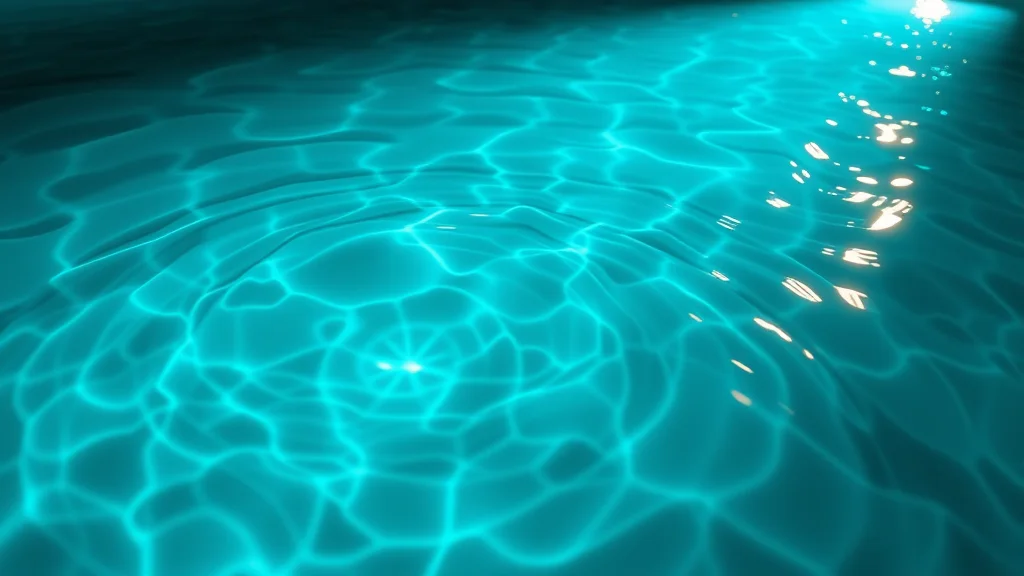
On top of the geometry problem, water adds two effects that models routinely botch. The first is caustics, the shifting net of bright ripple-light on the pool floor and on nearby skin. Real caustics are organic and irregular; AI caustics tend to be either absent or a fake regular mesh. The second is reflection: the pool surface should mirror the sky, the parasol, and the subject, and the model frequently reflects the wrong things or nothing at all. Get water wrong and the whole resort look collapses.
The distinction to keep front of mind, especially if you also make beach scenes, is that poolside is a built environment. There is no organic shoreline here. Everything has an edge, a grid, a manufactured surface. Lean into that cleanness and precision, because a pool that looks slightly too neat still reads as real, whereas a pool with wobbly tiles instantly reads as fake. For the broader environment vocabulary, our setting prompts reference is the companion piece.
The poolside prop tags
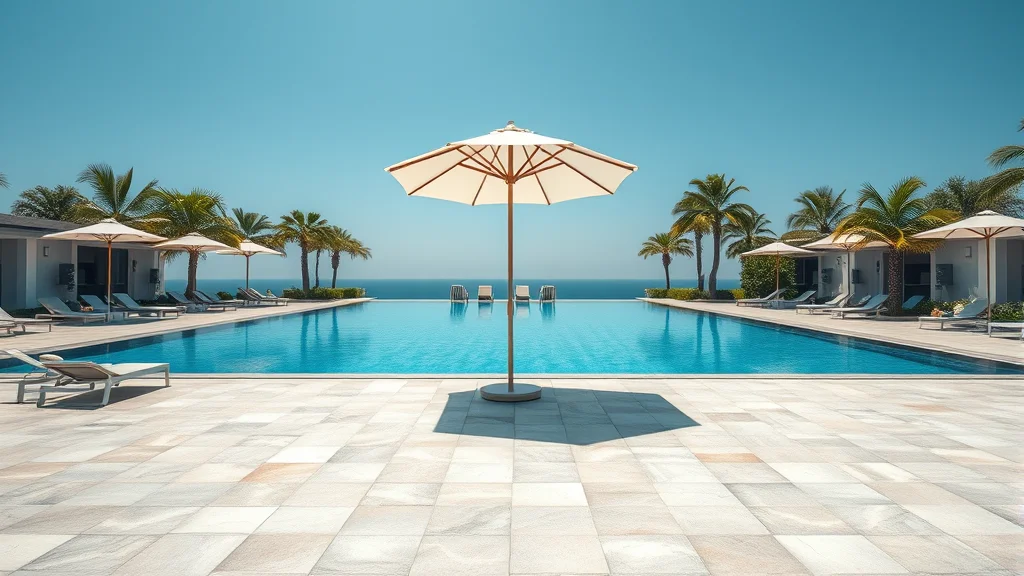
A resort pool deck is a set of manufactured props arranged on a tiled plane. Describe them precisely, because vague terms produce warped geometry. The table below groups the elements by role.
| Prop role | Prompt tags that work | Why it helps |
|---|---|---|
| The pool | turquoise swimming pool, clear blue water, water caustics, rippling surface, tiled pool edge, infinity edge | The centerpiece; caustics and a clean edge sell the resort look |
| Deck surface | stone tile deck, travertine tiles, wet tiled floor, clean pool coping, poolside steps | Gives a solid ground plane with readable geometry |
| Furniture | white sun lounger, poolside daybed, folded towel, side table, cocktail glass | Grounds the adult subject and adds a mid-plane |
| Shade and framing | large parasol, cabana, palm trees in planters, potted tropical plants | Adds vertical depth and a natural frame |
| Resort backdrop | modern resort building, glass railing, distant loungers, blue sky | Sets the upscale-resort context behind the subject |
Keep the tile descriptors specific: “travertine tiles” or “stone tile deck” build a cleaner grid than “nice floor.” Front-load the subject and the lounger, then the pool and its caustics, then the deck and the resort backdrop. That order tells the model the subject and near furniture must be crisp while the far loungers and building can soften.
Do not overstuff the deck. A pool with a lounger, a parasol, one plant, and a clean edge reads as luxurious. A pool with six loungers, three parasols, a bar, and a dozen plants turns into a warped mess of competing straight lines. Restraint keeps the geometry honest.
How to light a poolside scene
Poolside lighting is defined by bright, reflected daylight. The pool, the tiles, and the resort walls all bounce light back up, so the scene has a distinctive fill-from-below quality that flatters skin. Prompt “bright sunny daylight, reflected light from pool, soft fill light, high key, sparkling water reflections, water caustics on skin.”
That phrase “caustics on skin” is worth emphasizing. When a subject sits at the pool edge, the rippling water throws dancing light onto their legs and body. Naming it explicitly is what makes the model paint those shimmering patterns, and they are one of the most convincing tells of a real poolside shot. Our lighting prompts guide covers the full vocabulary, and the DSLR realism guide helps push the whole frame toward a photographic look.
Midday is the natural poolside time, but you can also run golden hour for a warmer, more intimate resort-at-sunset feel. Prompt “warm late afternoon sun, golden light on water, long shadows across deck.” The golden hour photo guide applies directly. Whatever the time, commit to one sun direction so the parasol shadow, the lounger shadow, and the subject shadow all agree. Mismatched shadows on a clean deck are glaring.
Staging, subject placement, and depth
Depth on a pool deck comes from the recession of the tile grid and the loungers toward the resort backdrop. Use that grid: a tiled deck receding into the distance gives the eye a strong perspective path. Place your adult subject in the foreground or mid-plane, reclining on a lounger or seated at the pool edge with legs in the water.
Contact and water interaction are everything here. Prompt “seated on pool edge, legs in water, water rippling around ankles, wet skin, weight resting on tiled edge.” That interaction, the water breaking around the legs, is what integrates the subject into the scene instead of pasting them on top of it. A subject sitting at a pool edge with perfectly still, unbroken water below reads as fake immediately.
Use shallow depth of field to keep the subject sharp while the far loungers, plants, and resort building soften: “subject in sharp focus, background resort softly blurred, bokeh on water sparkles.” This also conveniently blurs the repetitive far tile grid, which is where the model is weakest. For pose framing, the camera angle prompts guide helps, and for tasteful interaction language the scene action prompts list is the right reference. Building a matched resort series is easiest with the consistent photo set method.
A full copy-paste example prompt
Here is a complete poolside prompt for an SDXL or Pony based checkpoint. Swap the bracketed subject for your own original adult character.
Positive:
(masterpiece, best quality, photorealistic, 8k, raw photo),
beautiful adult woman [your character description, age 20s],
seated on the tiled edge of a turquoise swimming pool,
legs in the water, water rippling around ankles, wet skin,
clear blue pool water, water caustics on pool floor and on skin,
rippling reflective surface, clean travertine tile deck,
white sun lounger with folded towel, large parasol,
potted tropical plants, modern resort building behind, glass railing,
bright sunny daylight, reflected light from pool, soft fill from below,
high key, sparkling water reflections, consistent shadow direction,
shallow depth of field, subject in sharp focus, resort softly blurred,
detailed skin texture, natural skin, subsurface scattering,
shot on 50mm lens, clean bright color grade

Negative:
(worst quality, low quality, jpeg artifacts), warped tiles,
bent pool edge, wavy tile grid, broken caustics, fake mesh caustics,
still glassy water where legs enter, wrong reflections,
floating body, extra limbs, deformed hands, mutated fingers,
plastic skin, oversaturated, cartoon, duplicate loungers,
impossible parasol ribs, watermark, text
To fine-tune the water and sky color, the color grading prompts let you shift from cool crisp resort to warm sunset, and the skin texture tags keep wet skin from going plastic under bright light.
Sampler, CFG, and checkpoint notes
Clean tile geometry and believable caustics both need enough sampler steps to resolve. Use DPM++ 2M Karras or DPM++ 3M SDE Karras at 30 to 36 steps. The straight tile edges in particular wobble at low step counts, so do not skimp.
Hold CFG around 4.5 to 6.5. Too high and the turquoise water goes neon and the bright deck clips to pure white; too low and the tile grid loses definition. A strong realism checkpoint keeps the geometry and skin honest. RealVisXL and CyberRealistic Pony both handle bright reflected daylight and clean architecture well, and the full checkpoint roundup and CFG and sampler reference compare the options.
Generate at a landscape or square aspect (1216×832 or 1024×1024) so the deck and pool have room to recede, then upscale. The upscale pass is where the tile grain, the caustic sparkle, and the water ripples gain their final crispness. Follow the upscaling guide at about 0.3 denoise so the upscaler sharpens without redrawing your tiles. If the base pass looks soft, the get better results checklist will usually sort it before you reroll.
Where it breaks and how to fix it
Poolside has four signature failure modes, all fixable.
Warped or wavy tiles are the number one problem. The deck grid bends and the pool coping curves. Fix by masking the worst tile region and inpainting at low denoise with “straight tiled deck, even grid, clean stone tiles.” The inpainting guide covers masking geometry cleanly. Cropping tighter so less of the far grid shows also helps.
Wrong or missing reflections come next. The pool surface reflects the wrong sky or nothing at all, or the subject casts no reflection. Fix by masking the water surface and regenerating with “pool surface reflecting sky and parasol, subtle subject reflection.” Keep it subtle; an overdone mirror reflection looks as fake as a missing one.
Broken caustics are the third tell. The ripple-light on the pool floor is either absent or a fake regular mesh. Prompt “organic irregular water caustics, dancing light on pool floor” and, if needed, inpaint the pool floor alone. Real caustics are never a neat grid.
Still glassy water where the subject enters is the fourth. Legs sit in perfectly flat water with no disturbance. Prompt for ripples and inpaint water breaking around the legs. For overall softness use the blurry image fix, for weak texture run the add detail pass, and for any hand or foot slips, mask and regenerate just that region.
Building a matched poolside series
A single poolside frame is fine, but a matched set on the same resort deck is what reads like a genuine photo shoot at a genuine resort. The catch is that a pool deck is all fixed geometry, so consistency matters even more than in a natural setting. If the tile pattern, the parasol position, or the pool shape shifts between frames, the eye catches it instantly, because manufactured geometry is supposed to stay put.
Lock the environment description word for word and reuse it across every generation, changing only the pose and camera. If your hero frame says travertine deck, kidney-shaped turquoise pool, white parasol on the right, resort building behind, then every frame must repeat that exactly. Use image to image from your strongest frame to hold the deck while you change the pose; the img2img workflow feeds the model your established pool and only nudges the subject, keeping the tiles and the parasol stable. Pair it with the character consistency techniques so the subject holds across frames.
Because the geometry is the fragile part, this is the one setting where a ControlNet pass pays off across the whole set. Lock the deck edge and the pool shape with a depth or lineart map from your hero frame, then reuse that same map for every generation. The controlnet guide walks through capturing and reusing a structure map, and it keeps the tile grid honest frame after frame instead of leaving it to chance. Finish with a single unified bright color grade so the whole set reads as one sunny afternoon at one resort. For the tighter frames where you want the water sparkle to blur into the background, the bokeh photo guide helps, and any frame with a warped tile or a broken caustic gets its final cleanup in the photo editing workflow before the set ships.
Time of day and water color
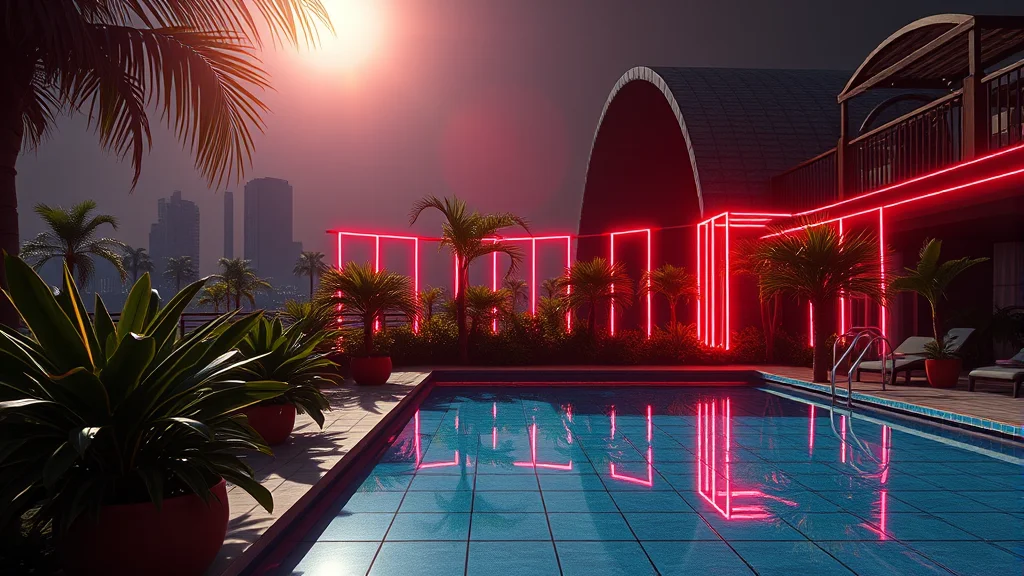
One lever that changes a poolside scene more than any prop swap is the time of day, because it drives both the light and the color of the water. At bright midday the pool reads as a saturated turquoise, the caustics are sharp and dancing, and the whole deck feels crisp and high energy. Prompt clear turquoise water, sharp caustics, bright even daylight for that look. In late afternoon the water shifts warmer and greener, the caustics soften, and the deck picks up long shadows that add drama. Prompt warm afternoon light, golden reflections on water, long deck shadows to move there. At dusk you can push into a lit-pool look where the underwater lights glow and the deck falls into shadow, which is a completely different, more intimate mood: prompt underwater pool lights glowing, deck in shadow, warm ambient dusk.
Each of these reads as the same physical location at a different hour, which is exactly the variety that makes a set feel real. Just remember that water color and light direction must agree with each other and with the sky. A neon-turquoise pool under a warm sunset sky is a giveaway, because real water borrows its color from the sky above it. Let the water cool when the light is bright and warm when the light is golden, and the whole scene holds together. If you are unsure which direction to push, the color grading prompts and the mood and atmosphere prompts give you the adjectives to steer it cleanly, and the get better results checklist catches the mismatches before you commit to an upscale.
Conclusion
A convincing poolside NSFW scene is a balancing act between clean geometry and living water. Give the model a precise tiled deck, a turquoise basin with named caustics, one lounger and one parasol rather than a cluttered resort, and a single committed sun direction. Place your adult subject at the pool edge with the water visibly breaking around their legs, keep the far deck soft with shallow depth of field, and then fix the four usual failures: warped tiles, wrong reflections, broken caustics, and glassy water. Nail the geometry and the water behavior together, pair them with a strong realism checkpoint and a real upscale, and your pool deck reads as a genuine resort photograph rather than a warped render of straight lines.
Frequently asked questions
What is the difference between a poolside and a beach AI scene?
Poolside is a built environment: tiled deck, straight coping, a turquoise basin, loungers, and a parasol, all with manufactured geometry. A beach is a natural shore with irregular sand and foam. Prompt poolside for clean precision and geometry; prompt beach for organic irregularity.
Why do my pool tiles keep warping or bending?
Straight tile grids are exactly what diffusion models fail at. Use enough sampler steps (30 to 36), prompt specific tiles like travertine tiles, even grid, and inpaint the worst region at low denoise with straight tiled deck. Cropping tighter so less far grid shows also helps.
How do I get realistic water caustics in a pool?
Name them explicitly: organic irregular water caustics, dancing light on pool floor, caustics on skin. Real caustics are irregular, so add no repeating mesh to the negative. If they still look fake, inpaint the pool floor and nearby skin on their own.
Why do the reflections on my pool look wrong?
The model reflects the wrong sky or nothing at all. Mask the water surface and regenerate with pool surface reflecting sky and parasol, subtle subject reflection. Keep it subtle; an overdone mirror reflection looks as fake as a missing one.
How do I integrate the subject with the water believably?
Make the water react to the body. Prompt seated on pool edge, legs in water, water rippling around ankles, wet skin. Still glassy water where legs enter is a dead giveaway, so inpaint ripples breaking around the legs if the base pass leaves it flat.
What lighting works best for poolside scenes?
Bright reflected daylight is the signature look, with soft fill bouncing up from the pool and deck to flatter skin, plus caustics on skin. Golden hour gives a warmer sunset-resort feel. Either way, commit to one sun direction so parasol, lounger, and subject shadows all agree.
Which checkpoint and settings suit poolside scenes?
RealVisXL and CyberRealistic Pony handle bright daylight and clean architecture well. Use DPM++ 2M Karras or 3M SDE Karras at 30 to 36 steps, CFG 4.5 to 6.5, a landscape or square aspect, and a proper upscale at about 0.3 denoise.
How many props should a pool deck scene include?
Keep it minimal: one lounger, one parasol, one plant, a clean pool edge. A cluttered deck of six loungers, three parasols, and a bar turns into a warped mess of competing straight lines. Restraint keeps the geometry believable.